Short answer: tariffs did push prices up, but gold pushed them up more. Gold went up about 60 per cent in a year. It hit nearly $4,400 an ounce in October 2025 and went past $5,100 in January 2026. Meanwhile the tariff on Indian jewelry fell from as much as 50 per cent in 2025 to about 15 per cent now. What has really changed in the shop is the bottom of the range. The cheap shelf has gone, and a lot of buyers moved to silver and lab grown stones.

If you sell jewelry in the US, the last two years have been hard to keep up with. The rate went up, a court threw it out, a new one came in, then that one expired too. Here is what happened to prices, and where things stand now. If you want the full charge by charge breakdown there is a separate guide with a calculator.
It was gold, not the tariff
In December 2025, when tariffs were all anyone talked about, the head of Jewelers of America told reporters that shoppers would see higher prices, but that it had more to do with the price of gold than with tariffs.
Look at what gold did:
| When | Gold, per ounce |
|---|---|
| Through 2025 | Up roughly 60% over the year |
| Late October 2025 | Peaked near $4,400 |
| January 2026 | Passed $5,100 |
| Late March 2026 | Back to about $4,600 |
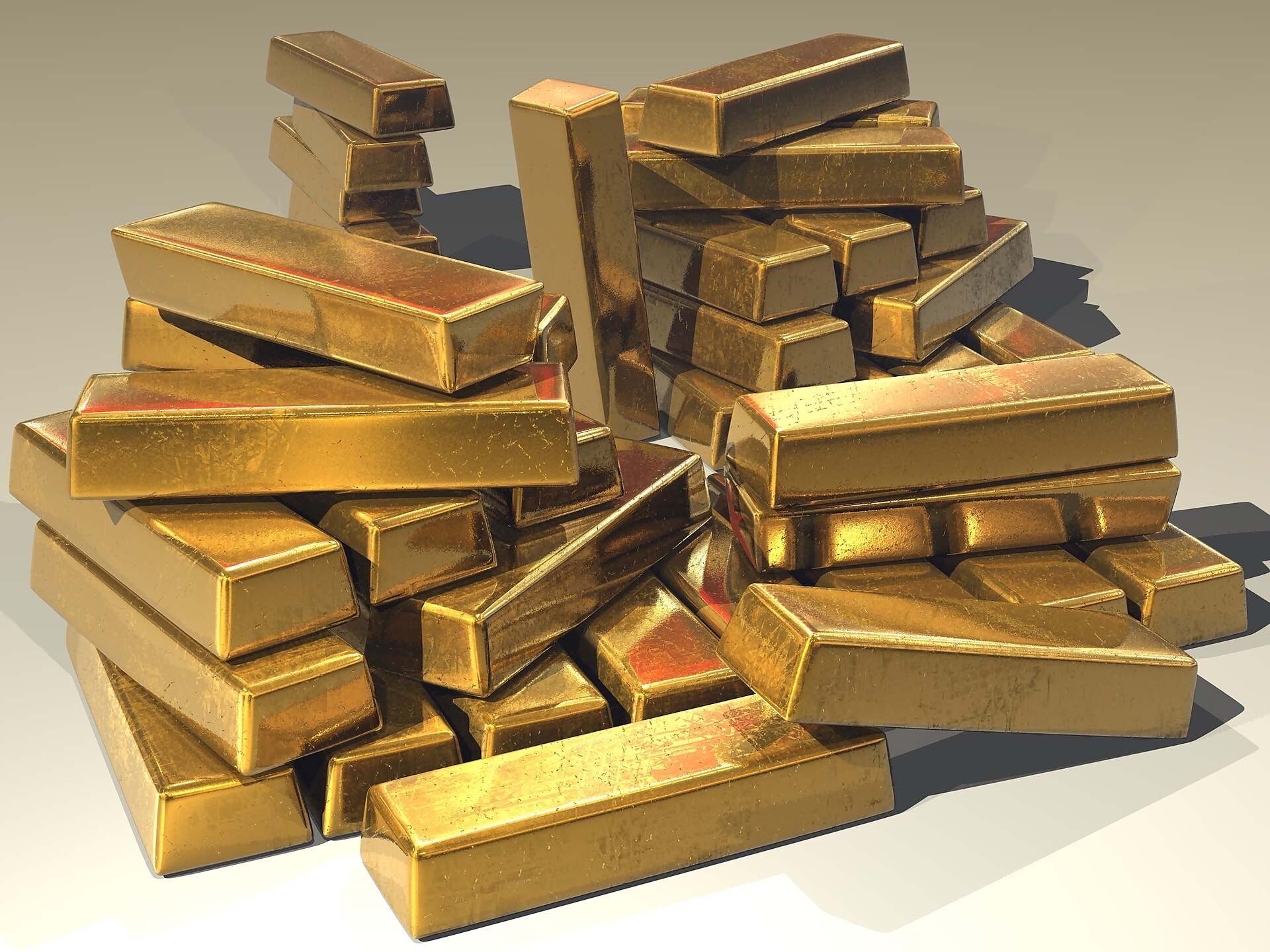
A 15 per cent tariff on a gold ring hurts. A 60 per cent jump in the metal itself hurts a lot more. And that one hits American made pieces too, which no tariff touches.
Where the tariff stands now
The rate on Indian goods has changed four times in two years.
| When | What applied |
|---|---|
| August 2025 | Up to 50% on Indian goods, under emergency powers |
| 20 February 2026 | The Supreme Court ruled those powers had been used unlawfully |
| 24 February to 23 July 2026 | A temporary 10% global tariff under Section 122, capped by law at 150 days |
| From 24 July 2026 | Section 301. India in the lower band at 10%, on top of normal duty |
So silver jewelry from India now pays about 15 per cent in total: a 5 per cent normal duty plus the 10 per cent tariff. Jewelry from China, Thailand, Vietnam, Turkey and the UAE pays about 17.5 per cent. The European Union is capped at 10 per cent in total.
One thing worth knowing: the 2025 tariffs were struck down because of how they were brought in, not because anyone decided they were too high. Section 301 is the older route, the one the US has used for years, so this time it is unlikely to be overturned.
What retailers actually did
They put prices up and said why. Pandora, which has more stores than anyone, said publicly that tariffs would push up the price of affordable jewelry, and later put its own bill at hundreds of millions of kroner a year. Mejuri emailed its customers to say gold, silver and tariffs together meant prices were going up.
They moved things around. Pandora makes in Thailand, Vietnam, India and China. It changed some of its sourcing and started shipping to Canada and Latin America direct instead of through its US warehouse.
They changed what they sell. This is the part that matters if you are buying stock.
The cheap shelf has gone
Retailers all say the same thing. The customer who wanted to spend a hundred dollars came in and found nothing there.
The buyer at Day’s Jewelers in Maine said the $99 price range has basically gone, even in silver.
The head of Borsheims in Omaha said the problem now is finding anything that fits a customer’s budget, especially under $500.
Higher up, rich buyers carried on as normal. It is the middle that moved, and it moved to lab grown diamonds and silver. People still wanted to buy a gift, they just did not want to pay gold prices for it.
Why silver got off lighter
Silver pays the same percentage as gold, because customs goes by what the piece is, not what it costs. But that percentage is charged on a much smaller number.
| Wholesale order from India | Tariff at 15% |
|---|---|
| $1,000 of silver jewelry | $150 |
| $1,000 of gold jewelry | $150, on a fraction of the pieces |
A thousand dollars buys a lot of silver pieces and very few gold ones. So the duty per piece is small on silver and big on gold. Put that next to a 60 per cent rise in gold and you can see why both retailers and customers went the same way.
Silver is where the volume went. Not because it suddenly became fashionable, but because people could still afford it.
If you are buying stock right now
- Split the two. If your cost went up 30 per cent, work out how much was metal and how much was duty. You deal with them differently. Metal you design around, duty you source around.
- Check where your stock is actually made. There are five points between India and Thailand now, which adds up at volume. Your supplier may have moved production without telling you.
- Do not forget the courier fees. The $800 duty free allowance ended in August 2025 and a court upheld that in August 2026. Every parcel now carries entry and disbursement fees, and FedEx put its disbursement fee up in July 2026.
- Work back from the price, not the metal. If $99 is gone, the question is what you can put at $149 that still looks like a proper gift.
The honest version
Tariffs got the headlines. Gold did the damage. If every tariff went tomorrow, a silver piece would land about 15 per cent cheaper and gold would still be expensive, because the metal is expensive. If you are blaming your whole price rise on Washington, look at your cost sheet again.
What has actually changed is the order. India used to pay more duty than China and Thailand. Since July 2026 it pays less than both, and more than Italy. Worth checking where your supplier sits, because it may not be where it was two years ago.
So what do you put on the shelf
Put the two together and it is fairly obvious. The $99 shelf is gone, gold has priced out the middle, and the customer who used to buy a small gold piece is now looking at silver with a decent stone in it. Every US retailer is trying to fill that gap this year.
To fill it properly you need three things. Silver that still looks white after six months on display. A stone that comes with a certificate. And someone who will make your design rather than sell you the same pieces as the shop down the road.
| What the gap needs | Why it is hard to buy |
|---|---|
| Silver that holds its finish | Sterling is plated to hide tarnish, and plating wears. Argentium 960 is 96 per cent fine silver and needs no plating at all |
| Stones with certificates | Most silver suppliers buy stones in and cannot tell you the grade. We set certified moissanite, lab grown diamonds and natural diamonds |
| Your own designs | Catalogue suppliers sell the same pieces to your competitor. We make to your design, and a private label design is not resold |
| One supplier, not three | Metal from one place, stones from another, setting from a third is how lead times slip. Casting, setting and finishing happen on one bench |
That is what we do. Argentia is an Argentium Silver Trademark Registered User, licence AS2475. We work in Argentium 960 only, and we set certified moissanite, lab grown diamonds and natural diamonds in the same workshop in Jaipur. Send a drawing, a photo, a CAD file or a sample and you get back a weight, a price and a lead time, with the landed cost in dollars including duty, before you commit to anything.
Frequently asked questions
Did Trump's tariffs raise jewelry prices in the US?
Yes, but less than the price of gold did. The head of Jewelers of America said in December 2025 that shoppers were seeing higher prices mainly because of gold rather than tariffs. Gold rose roughly 60 per cent over that year and peaked near $4,400 an ounce in late October 2025, then passed $5,100 in January 2026 before easing to about $4,600 by late March. Tariffs added to that, and they hit imported finished jewelry hardest, but the metal did more of the work.
What is the US tariff on imported jewelry in 2026?
Since 24 July 2026 imported jewelry pays its normal duty plus a Section 301 tariff. India sits in the lower band at 10 per cent, so silver jewelry from India pays about 15 per cent in total, made up of a 5 per cent normal duty plus the 10 per cent tariff. China, Thailand, Vietnam, Turkey and several others are in the higher band at 12.5 per cent, so their jewelry pays about 17.5 per cent. The European Union is capped at 10 per cent in total.
Why did jewelry tariffs change so many times?
Because the legal basis kept changing. Tariffs of up to 50 per cent were imposed on Indian goods in August 2025 under emergency powers. The Supreme Court ruled on 20 February 2026 that those powers had been used unlawfully. A temporary 10 per cent global tariff ran under Section 122 from 24 February, which the law caps at 150 days, and that expired on 23 July. The Section 301 regime replaced it on 24 July 2026 and is on a firmer legal footing, so it is less likely to be struck down.
How much have fine jewelry prices gone up?
There is no single figure, because the mix matters. Gold pieces rose most, tracking the metal. Diamond-set gold jewelry saw duty go from 5 per cent to 25 per cent during the 2025 peak, which one estimate put at about a billion dollars added to Valentine's Day spending in 2026. Silver rose too but from a far lower base. The clearest change retailers describe is at the bottom of the range: the $99 entry-level price has effectively disappeared, even in silver.
Are jewelry prices going to come down?
The tariff part might. Rates have moved several times in two years and India's rate has come down from the 2025 peak. The metal part is less likely to reverse quickly, since gold is being bought by central banks as well as consumers. Retailers planning 2027 ranges are mostly assuming metal stays expensive and treating tariff relief as upside rather than as a plan.
What are US retailers doing about it?
Three things. Raising prices, which Pandora and Mejuri both did publicly, both citing metal and tariffs together. Moving production, with Pandora shifting sourcing and shipping routes to reduce exposure. And changing the range, putting more weight behind silver and lab-grown stones, which is where middle-income customers moved.
Is silver jewelry affected by the tariffs?
Yes, at the same rates as gold jewelry, since customs classifies by heading rather than by price. Silver jewelry from India pays about 15 per cent in total. But the tariff lands on a much smaller base. A 15 per cent duty on a silver piece is a few dollars, where the same percentage on a gold piece is a meaningful number, which is part of why the middle of the market moved toward silver.
Can a manufacturer make jewelry to my own design in Argentium silver?
Yes. Argentia manufactures to a customer's own designs in Argentium 960, working from a CAD file, a technical drawing, a photograph, an existing sample or a written brief. You get a render with the metal weight and finish written out before any metal is cut, and a design commissioned as private label is not resold to another buyer or added to a house range.
Can Argentium silver be set with moissanite, lab grown diamonds and natural diamonds?
Yes, and one workshop can do all three. Argentia sets certified moissanite, lab grown diamonds and natural diamonds into Argentium 960 in the same workshop in Jaipur, so metal, stones, setting and finishing are not split across three suppliers. Argentium can be heat hardened before setting, which keeps prongs firm under larger stones.
Which country is cheapest to import jewelry from now?
For finished jewelry into the US, the European Union at 10 per cent total, then India, the UK, Mexico, Canada and 13 others at about 15 per cent, then China, Thailand, Vietnam, Turkey, the UAE and others at about 17.5 per cent. China can be higher again because the new tariff stacks on top of the Section 301 duties it already paid. Duty is only part of the landed cost, and the courier's entry and disbursement fees matter on small parcels.
Make your next range in Argentium
We make to your designs in Argentium 960, and we set certified moissanite, lab grown diamonds and natural diamonds under the same roof in Jaipur. Winged Unicorn stamped, no plating, wholesale and private label. Send a design and you get a weight, a price and the landed cost in dollars with duty included, before you order.
Sources
- JCK: looking back on jewelry retail in 2025, and ahead for 2026
- Associated Press: US tariffs are having an uneven effect on holiday prices
- National Jeweler: jewelry demand isn't stronger, prices are just higher
- Rapaport: Pandora to raise prices as tariffs drive costs
- CNBC: gold prices keep rising and jewelry companies are sounding the alarm
- OANDA: the weight of rising commodity prices in 2026
This guide is general information, not legal, tax or customs advice. Rates are current as of 25 September 2026 and have changed several times. Confirm with a licensed US customs broker before you ship.