
The short answer.
- Argentium is a patented silver alloy that replaces the copper in sterling silver with germanium.
- Copper is what makes sterling tarnish. Germanium forms a clear protective layer instead.
- It comes in three grades: 935, 940 and 960, named for silver content. Argentia produces in Argentium 960, which is 96 per cent fine silver.
- It is nickel-free, hypoallergenic, needs no plating, and is made from 100 per cent recycled silver.
- Genuine pieces carry the Winged Unicorn mark alongside the grade number.
If you run a jewellery brand and you have ever handled a tarnish return, you already understand the problem Argentium was invented to solve. Sterling silver is beautiful on the day it ships and grey some months later. Every solution the trade has reached for since, rhodium plating chief among them, is a way of delaying that outcome rather than removing it.
Argentium removes it at the alloy level. This guide covers what the metal is, how the grades differ, how to tell a genuine piece from a claim, and what you can and cannot say about it in your own marketing.
What Argentium silver is
Argentium is a modern silver alloy invented by Peter Johns, a master silversmith, at Middlesex University in London. It was patented in 1998. The alloy company that owns the patents and the trademarks operates from Dunn Street, Dalston, London E8.
Pure silver is too soft to hold a stone or survive daily wear, so it is always alloyed with something. Sterling silver uses copper for that job. Copper does add hardness, and it also does something else: it reacts with oxygen and with sulphur compounds in air, sweat and cosmetics, and the reaction product is the dark film we call tarnish.
Argentium replaces part of that copper with germanium. Germanium hardens the alloy too, but it behaves differently at the surface. It migrates outward and forms a thin, transparent germanium oxide layer that seals the metal underneath. The layer is invisible, it is part of the metal rather than a coating applied to it, and it rebuilds itself over time, which means the tarnish resistance of an Argentium piece actually improves as it ages.
The grades: 935, 940 and 960
Argentium is sold in grades named for the silver content in the alloy.
| Grade | Silver content | Where it sits |
|---|---|---|
| Argentium 935 | 93.5% fine silver | Just above the sterling standard of 92.5% |
| Argentium 940 | 94.0% fine silver | A later metallurgical improvement on 935 |
| Argentium 960 | 96.0% fine silver | Above the Britannia standard of 95.8% |
Higher grades are whiter and purer, and slightly softer before heat hardening. All three are more tarnish resistant than sterling. The practical difference for a brand is what the number lets you say at the counter: 960 is a genuinely high-purity precious metal, and it clears the Britannia threshold, which is a benchmark a British or European buyer will recognise.
Argentia produces in Argentium 960 only. We do not run a cheaper grade alongside it, because a house that offers both eventually has to answer which one is in the box.
How to tell a genuine Argentium piece
Argentium is a registered trademark. The name may only be used by licensed manufacturers, and the alloy carries its own mark: the Winged Unicorn, administered by the Argentium Guild, struck alongside the grade number.
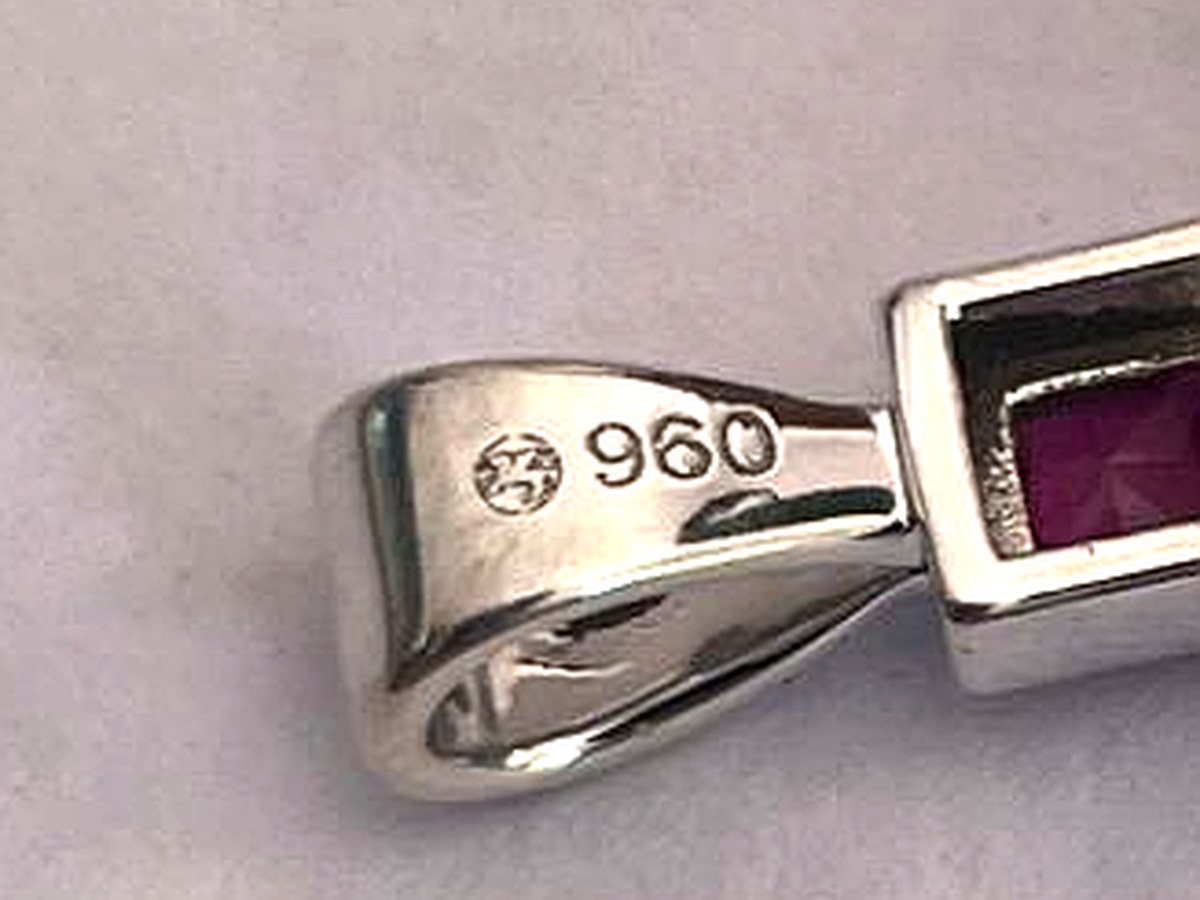
Argentia is an Argentium Silver Trademark Registered User, registration number AS2475, licensed by Argentium International Limited, London. You can verify it by quoting the number to Argentium International.
If a supplier describes a piece as Argentium and it carries no mark, ask why. If they cannot tell you which company supplies their master alloy, ask that too. The supply chain for this metal is short and traceable by design, and that traceability is a large part of what a buyer is paying for.
Argentium against sterling, point by point
| Property | Sterling silver · 925 | Argentium 960 |
|---|---|---|
| Silver content | 92.5% | 96.0% |
| Other alloy | Copper | Germanium |
| Tarnish | Within months | Up to 7 times more resistant, and improves with age |
| Plating | Usually rhodium plated to delay tarnish | None needed |
| Colour | Warmer, from the copper | Whiter |
| Skin | Copper reaction can mark skin | Nickel free and hypoallergenic |
| Source | Mixed, usually untraceable | 100% recycled silver, licensed alloy |
| Mark | 925 stamp | Winged Unicorn and grade number |
Does Argentium silver tarnish?
It resists tarnish. It is not immune to it, and any supplier who tells you otherwise is selling you a claim you will later have to defend.
In normal wear an Argentium piece holds its colour far longer than sterling, and when it does dull it comes back with a soft cloth rather than a polishing bath or a chemical dip. Because there is no plating, there is nothing to wear through and no point at which a different metal appears underneath.
Is Argentium silver hypoallergenic?
Yes. It is nickel-free, and the absence of a copper reaction means far less of the green or black skin marking that sterling causes on some people. For brands, this is most visible in earrings, which is usually the first line a buyer moves across.
What you can legally claim
Claim the metal, the purity and the behaviour. You can say a piece is Argentium silver, that it is 96 per cent fine silver, that it is nickel-free, that it is made from recycled silver, and that it is highly tarnish resistant.
Avoid tarnish-proof and non-tarnish. The alloy resists tarnish, it does not eliminate it, and an absolute claim is the one a regulator or a returning customer will hold you to. The accurate claim is strong enough on its own.
What it costs, and why
Argentium costs more per gram than sterling. There are two reasons and both are straightforward: the silver content is higher, and the alloy is licensed from the company that owns the patent.
The argument for paying it is not romantic. It is that the cost lands once, at purchase, instead of repeatedly across the life of the piece in replating, re-polishing, and tarnish returns handled at your counter rather than the factory's. A piece that still photographs correctly a year after it shipped is worth something on a shelf.
Where Argentium fits in a range
Between gold and mass-market silver there is a tier most retailers leave empty: a precious metal at a daily-wear price, certified, with nothing on it that degrades. That is the shelf Argentium occupies. It is bought again rather than bought once, which makes it a repeat-purchase category rather than a milestone one.