
The short answer.
- Jyotish prescribes an open-back setting so the stone touches skin. That removes the structural floor of the setting and leaves the prongs and gallery rail carrying everything.
- Argentium is harder than sterling as cast, roughly 125 Vickers against about 95, and hardens further to values commonly cited above 140.
- Sterling open-back mounts are usually rhodium plated to hide firescale. That puts a different metal between skin and silver, which defeats the point of specifying silver.
- Argentium does not form firescale, so the inside of the gallery stays clean silver with no plating at all.
- For heat-sensitive stones, harden the mount first, set the stone cold. Argentium hardens in air, without quenching.
Astrological gemstone rings are the hardest thing a silver bench is routinely asked to make, and almost nobody discusses why. The stones are large. The setting must be cut open underneath. The ring is worn every day, often for years, against skin. And the metal is not a design choice, because the tradition specified it before the customer walked in.
That combination puts more demand on the alloy than an engagement ring does. This is a guide to what actually fails, and why the metal answers most of it.
In this guide
- What the tradition prescribes about metal
- The open-back problem
- The plating problem nobody talks about
- Hardness, and a ten carat stone
- Firescale inside a gallery you cannot polish
- Setting a heat-sensitive stone
- A ring worn every day, never taken off
- Which stones traditionally go into silver
- Specifying a jyotish mount in Argentium 960
What the tradition prescribes about metal
In Vedic astrology, each of the nine planets is associated with a metal as well as a stone, and the pairing is part of the prescription rather than a matter of taste. Silver is associated with the Moon and is traditionally used for pearl and moonstone. It is widely prescribed for the stones of Saturn, Rahu and Ketu, which are blue sapphire, hessonite and cat's eye, and for the Venus stones, diamond and opal. Gold goes to the Sun and Jupiter, so to ruby and yellow sapphire. Copper goes to Mars, so to red coral. Mixed alloys, panchdhatu and ashtadhatu, are used where a chart calls for them.
Counted across the navagraha, that puts a majority of prescribed stones into silver or into an alloy where silver is a principal component. Which is why a bench serving this market makes far more silver mounts than gold ones, and why the quality of the silver is a bigger commercial question here than in almost any other category.
A note on what this article is and is not. Everything above is a description of what the Jyotish tradition prescribes. It is not a claim by us about what a gemstone does, and nothing here should be read as astrological advice.
We are a bench. We make the mount to the specification the wearer's astrologer has given them, in the metal that specification names. Which stone, which weight, which finger and which day are questions for a qualified astrologer, not for a manufacturer, and any manufacturer offering opinions on them is working outside their competence.
The open-back problem
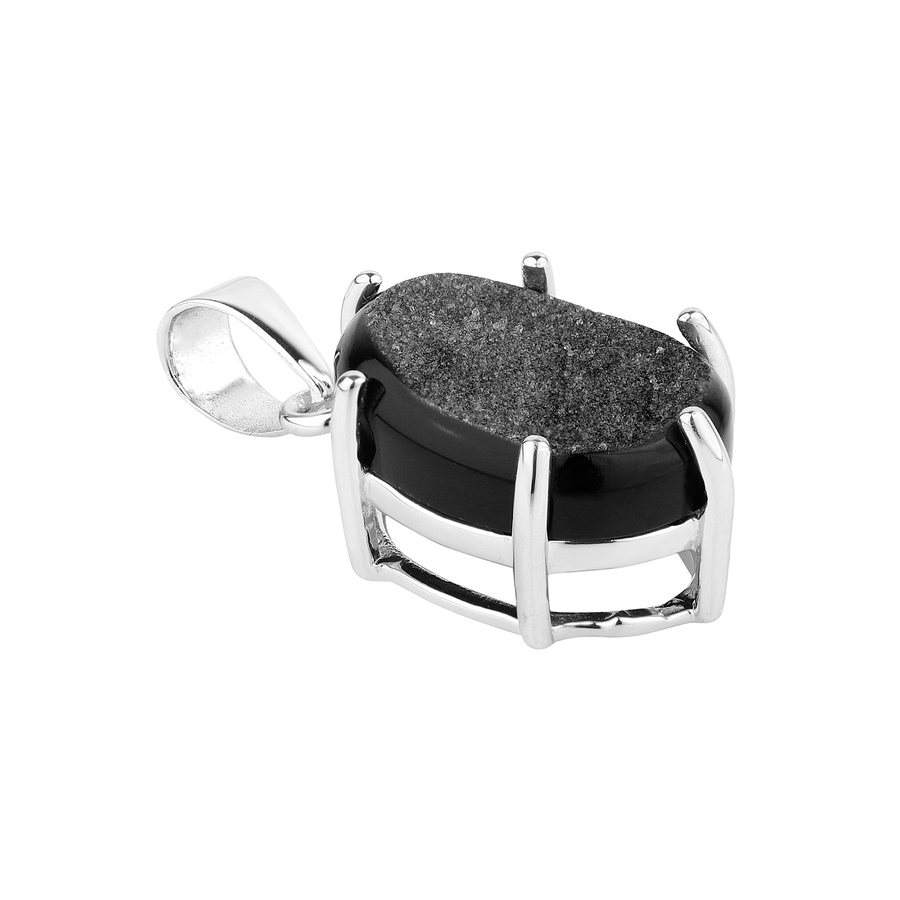
The tradition holds that the stone should touch the wearer's skin. In practice that means the base of the setting is cut away, leaving an opening under the stone. Almost every astrological ring is made this way, and it is the single fact that governs everything else about the construction.
Consider what an open back actually removes. In a closed-back ring, the stone sits on a solid floor. That floor takes the vertical load, ties the walls of the setting together, and stops the whole assembly from spreading. Cut it out and the geometry changes completely: the stone is now carried by a thin gallery rail and by the prongs, and every knock is a lever acting on those prongs with nothing underneath to resist it.
In gold this is manageable, because the alloys used are hard. In standard sterling it is the reason astrological rings come back to the counter with a loose stone. The metal is doing structural work it is not really hard enough to do.
The plating problem nobody talks about
This is the part of the category that goes unexamined, and it is worth being blunt about.
Sterling silver tarnishes, because it contains copper. Most commercial sterling jewellery is therefore rhodium plated, a microns-thin layer of a platinum-group metal deposited over the silver to keep air off it. In this category, plating is used for a second reason as well, which we come to in the firescale section below.
Now hold that against the prescription. The tradition specifies silver, and separately specifies that the stone should be in skin contact. A rhodium-plated ring means the wearer's finger is in contact with rhodium, not silver, everywhere the metal touches. The metal that was specified is underneath a coating of a different one.
Then it gets worse rather than better, because plating wears. On a ring worn daily, it goes first at the shank and at the high points of the setting, unevenly, over months. So the contact surface changes from all-rhodium, to patchy rhodium and silver, to silver with tarnish blooming at the exposed edges. Whatever the ring was on day one, it is something else by year two.
Argentium removes the question entirely. It resists tarnish through its own alloy chemistry rather than through a coating, so it needs no plating. The skin is in contact with 96 per cent fine silver on the first day and on the thousandth.
Why this matters commercially, not just philosophically.
- A jyotish retailer selling a plated silver ring is selling a ring whose contact metal changes over time, and a knowledgeable customer will eventually raise it.
- Replating is a recurring service cost and it lands on the retailer, not the factory.
- An unplated Argentium mount is a claim the retailer can make and defend: silver, all the way through, permanently.
Hardness, and a ten carat stone
Astrological stones are specified by weight, and the weights are often substantial. A prescription of five, seven or ten carats is unremarkable in this category, where a typical engagement ring centre is a fraction of that.
A ten carat stone is a different engineering problem from a one carat one. It is physically large, it sits high, and it has real mass. Every time the ring catches a pocket or a door handle, that mass acts through a lever arm on prongs that have no floor beneath them. Prongs do not usually fail suddenly. They splay, a fraction at a time, until one day the stone moves.
Hardness is what resists that, and it is measurable.
| Condition | Sterling 925 | Argentium |
|---|---|---|
| As cast | around 95 HV | around 125 HV |
| Precipitation hardened | marginal gain, roughly 10 HV, and deep firescale unless heated under inert gas | commonly cited above 140 HV after heating at around 260 to 300°C |
| Quench required to harden | Yes, in practice | No. Hardens during air cooling |
| Firescale from that heating | Yes, deep, unless protected | None |
The last two rows deserve more attention than the first two. Sterling can technically be heat treated, but the gain is small and the process generates firescale through the depth of the metal unless it is done under nitrogen or argon, which is not a normal jobbing-bench capability.
Argentium hardens differently, and for a reason that is quietly elegant. Germanium-bearing silver conducts heat less readily than sterling does, so a piece coming off the heat cools more slowly. That slow cool is itself the hardening cycle. No quench is needed, which matters enormously at a bench, because there are very few moments in the making of a nearly finished ring when quenching it is a safe thing to do.
Firescale inside a gallery you cannot polish
Firescale is the reddish-purple bloom of cupric oxide that forms beneath the surface of sterling silver when it is soldered or annealed. It is caused by the copper in the alloy, and it is not a surface stain you can wipe off. It is removed by aggressive polishing, by acid, by electro-stripping, or by depletion, and where none of those reach, it is hidden under plating.
In most jewellery you can polish it out because you can reach the surface. In an open-back astrological ring you cannot, and this is the specific technical bind of the category.
The inside of the gallery, the underside of the stone seat, and the inner faces of the prongs are all heated during setting and soldering. All of them are visible through the opening in the base. All of them touch the wearer's finger. And all of them are geometrically impossible to polish properly, because a polishing mop cannot get into a tight gallery under a set stone.
So the trade does the only remaining thing: it plates the ring, which hides the firescale and returns us to the plating problem two sections above. The two problems are the same problem, and the industry solution to one causes the other.
Argentium does not form firescale at all. Germanium takes up oxygen more aggressively than copper does and forms a stable germanium oxide at the surface, which blocks oxygen from getting inside the metal, so the cupric oxide that constitutes firescale cannot form in the first place. Discolouration from soldering stays on the surface and lifts in the pickle.
The practical result is that an Argentium gallery is clean silver right through, including the parts nobody can reach, with nothing plated over it.
Setting a heat-sensitive stone
Several stones in regular astrological use cannot take heat at all. Pearl and red coral are organic and will be destroyed. Emerald is commonly oil or resin treated and will craze. Opal contains water and can crack. Moonstone is cleavage-prone.
This rules out any process that heats the ring after the stone is in it, which in turn rules out hardening the finished ring. The correct sequence is the other way round, and it is worth spelling out because plenty of benches get it wrong:
- Cast and construct the mount in Argentium 960, empty.
- File, pre-polish and finish the gallery while you can still reach into it.
- Precipitation harden the empty mount at around 260 to 300°C, then let it air cool. No quench.
- Set the stone cold. The prongs are now hardened, the shank is hardened, and the gemstone has never seen heat.
- Final polish only on reachable surfaces. Nothing needs hiding, so nothing needs plating.
Hardened prongs are a little stiffer to push over a stone, which is a real trade and an experienced setter accounts for it. The alternative, soft prongs that push easily and splay just as easily, is not a better outcome for anyone.
A ring worn every day, never taken off
One more thing separates this category from ordinary jewellery: these rings are not taken off. Tradition often calls for continuous wear, and the ring is not removed for washing, cooking, sleeping or exercise.
That is close to a worst case for sterling silver. Constant skin contact, sweat, soap, cosmetics, and in most of India and South-East Asia a humid climate for much of the year. Sterling darkens in weeks under those conditions, and the darkening concentrates exactly where the metal is hardest to clean, which is the gallery, the prong bases, and the join where the setting meets the shank.
Then the wearer has a problem the trade rarely thinks about. Cleaning a jyotish ring aggressively is not a neutral act to the person wearing it, and many will not use a chemical dip on an object they regard as consecrated. So the ring simply goes dark and stays dark.
Argentium is up to seven times more tarnish resistant than sterling, and its resistance improves with age as germanium continues migrating to the surface. When it does dull, a soft cloth is enough. No dip, no bath, no removal from the finger for a week while it goes to a jeweller.
Which stones traditionally go into silver
A working reference, set out as what the tradition prescribes. Individual charts vary, and the astrologer's specification governs.
| Stone | Planet | Metal traditionally prescribed |
|---|---|---|
| Pearl, Moti | Moon | Silver |
| Moonstone | Moon | Silver |
| Blue Sapphire, Neelam | Saturn | Silver, panchdhatu or ashtadhatu. Not gold |
| Hessonite, Gomed | Rahu | Silver or panchdhatu |
| Cat's Eye, Lehsunia | Ketu | Silver or panchdhatu |
| Diamond, Heera | Venus | Silver, platinum or white gold |
| Opal | Venus | Silver |
| Ruby, Manik | Sun | Gold or copper |
| Yellow Sapphire, Pukhraj | Jupiter | Gold |
| Red Coral, Moonga | Mars | Copper or gold |
| Emerald, Panna | Mercury | Gold, sometimes silver |
Specifying a jyotish mount in Argentium 960
If you are a retailer or a designer commissioning mounts, this is the specification we would build to unless you tell us otherwise. Send it to any bench and it will tell you quickly whether they understand the category.
Specification, open-back astrological ring, stone 5 to 12 carats.
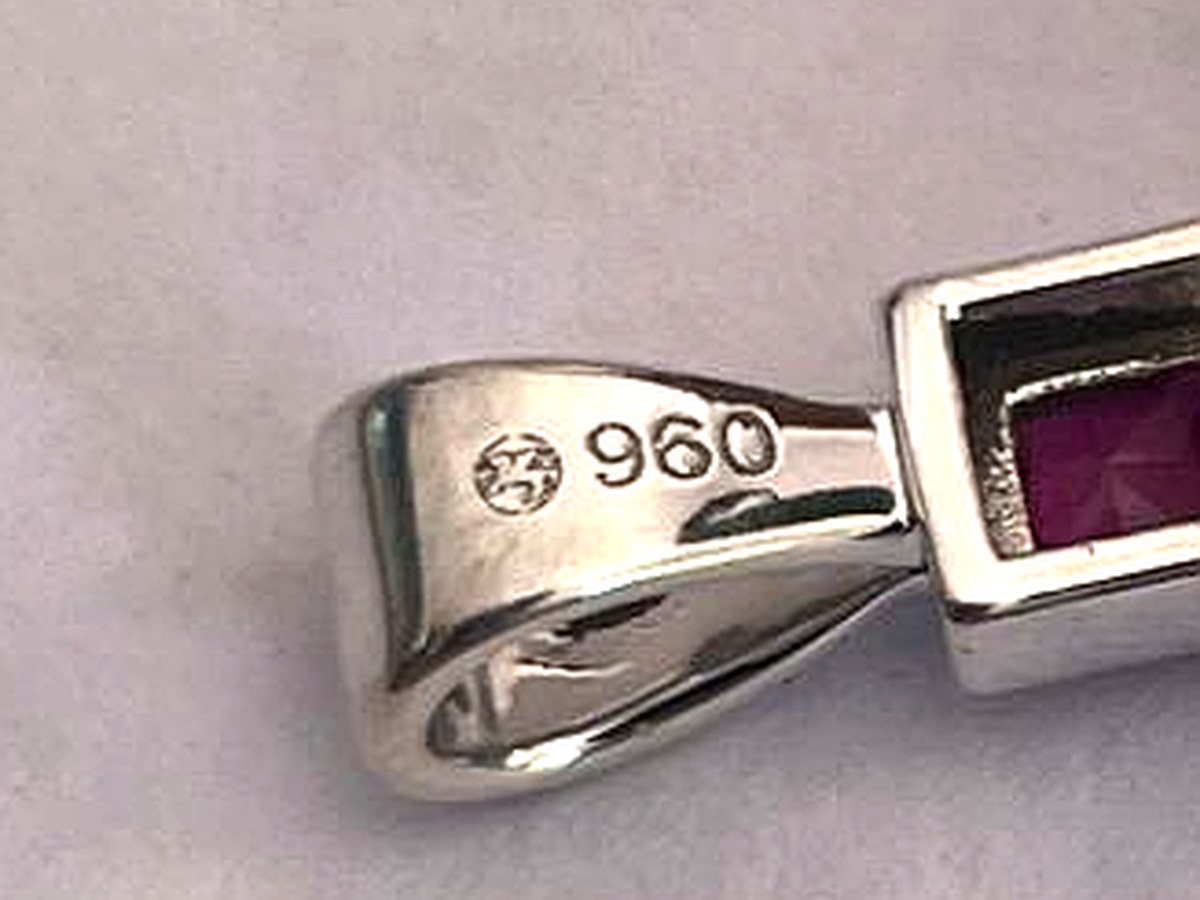
- Metal: Argentium 960, unplated, Winged Unicorn stamped.
- Back: open, aperture sized so the stone bears on skin without the rail cutting the finger.
- Prongs: four minimum, six for stones above roughly 8 carats or with a wide table. Not three.
- Gallery rail: thickened relative to a closed-back equivalent, because it is now the only tie across the setting.
- Shank: heavier at the shoulders, tapering to the base. A large stone tips a light shank out of round.
- Hardening: precipitation harden the empty mount before setting, air cool, no quench.
- Setting: cold set, always, for pearl, coral, emerald, opal and moonstone.
- Finish: no rhodium, no plating of any kind. Polish only what is reachable, because nothing needs hiding.
- Stone: supplied by you or by the customer's astrologer, with its certificate. We set what we are sent.
The short version
An astrological ring asks silver to do three things at once: carry a large stone with its floor cut out, touch skin permanently as the specified metal and not as a plated substitute, and stay presentable on a finger that never removes it.
Sterling manages one of those. Argentium 960 is harder where the prongs need it, forms no firescale where nobody can polish, needs no plating between skin and metal, and holds its colour through years of continuous wear.
If you supply this market and you are currently sourcing plated sterling mounts, send us a design and a stone size and we will quote the same piece in unplated Argentium 960 so you can compare properly.