
The short answer.
- Sterling silver tarnishes, so the industry coats it with rhodium. That coating is the real environmental problem, and almost nobody counts it.
- Rhodium is the rarest platinum group metal in commercial use. Roughly 30 tonnes are mined a year, about 80 per cent of it in South Africa.
- It takes 10 to 40 tonnes of ore to produce one troy ounce of platinum group metal, smelted above 1,500°C.
- And plating wears off. It has to be redone every one to three years, so the cost repeats for as long as the piece is worn.
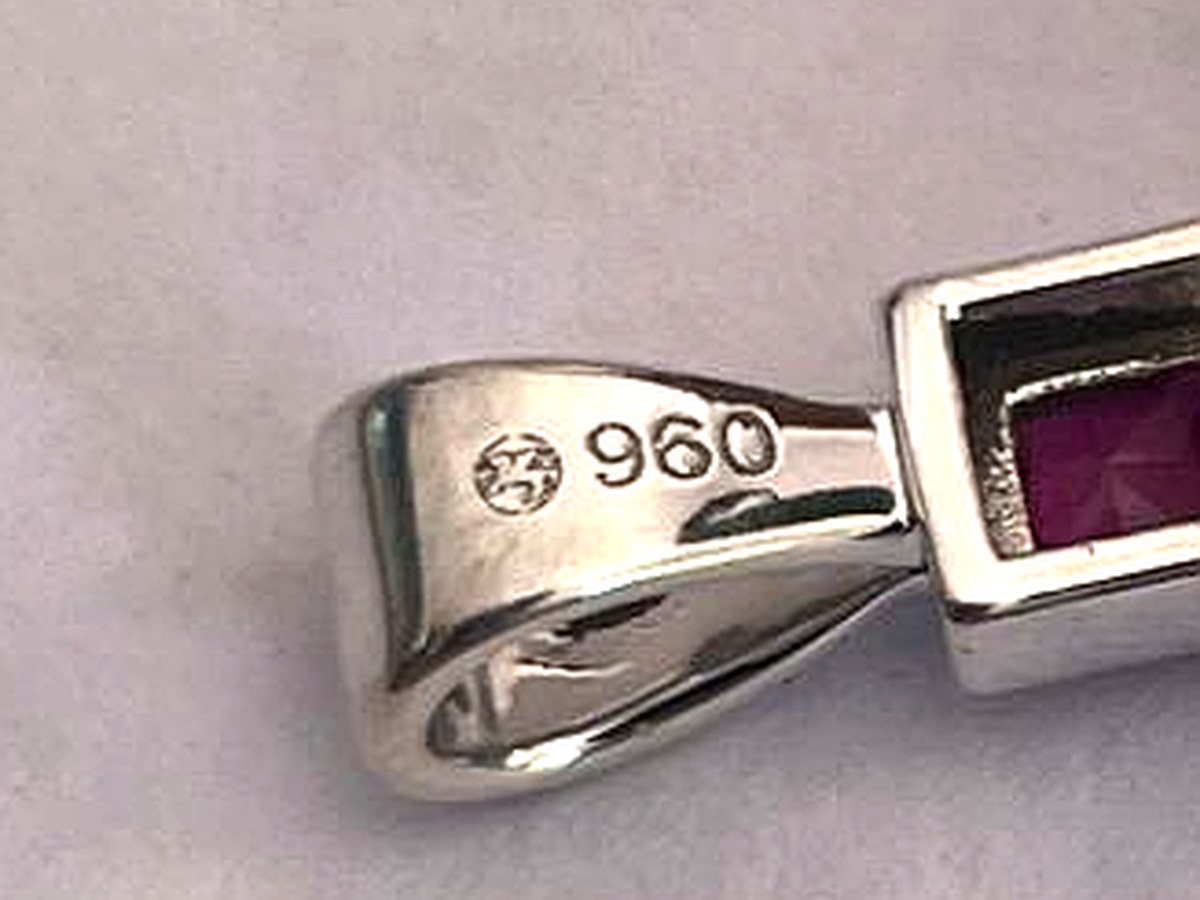
- Argentium 960 needs no plating at all, is 100 per cent recycled, and makes no firescale that needs stripping.
When people talk about sustainable jewellery, they usually only talk about the metal. Recycled silver, recycled gold, traceable stones. All of that matters. All of it misses the biggest hidden process in silver jewellery.
Most silver jewellery is not just silver. It is silver with a coating on top, and that coating is one of the rarest and hardest-to-mine metals on earth.
In this guide
Why sterling gets plated
Sterling silver is 92.5 per cent silver mixed with copper. Copper is used because it makes the metal harder. But it also reacts with oxygen and sulphur in the air, and that reaction is the black film we call tarnish.
The industry's answer has been the same for decades. Coat the finished piece with a very thin layer of rhodium, a platinum group metal that does not tarnish, so the customer sees a bright white surface instead of the silver underneath.
It works, in the sense that it delays the problem. It does not solve it. The layer is a few microns thick and sits on the outside of something that rubs against skin and clothes every day.
So a plated sterling piece is not really just silver. It is silver wearing a thin coat of one of the scarcest metals in use, and that coat has to be replaced again and again for as long as the piece is worn.
What rhodium mining costs
Rhodium is not a small ingredient. It is one of the hardest metals to mine in the whole jewellery industry, and it is put on pieces that sell for a fraction of what fine jewellery costs.
mined per year
South Africa
ounce of PGM
temperature
These numbers come from the mining industry itself. The International Platinum Group Metals Association states that South African PGM-bearing ores generally contain 2 to 6 grams of platinum group metal per tonne, and that it can require between 10 and 40 tonnes of ore to produce one troy ounce. That ore is crushed, milled, treated by froth flotation, then smelted in electric furnaces at temperatures over 1,500°C. From first break of ore to finished metal can take up to six months.
Three further facts compound it:
- There is no rhodium mine. Rhodium only comes out as a by-product of mining platinum and palladium. You cannot get it on its own.
- Supply is very concentrated. Around 80 per cent comes from South Africa, from deep, old mines that need a lot of labour and power, on an electricity grid that is not reliable.
- The ESG record is poor. Documented risks in the rhodium supply chain include pollution, damage to biodiversity, and corruption, with reported cases of illegal mining.
None of this is secret. But nobody mentions it when you buy, because nobody puts the plating on the label.
Plating wears off
There is one more problem. Plating does not last.
Plating is measured in microns. On a ring or bracelet worn every day against skin, cloth and surfaces, it rubs off. The industry guidance is to replate every one to three years for daily-wear pieces, and retailers are told to budget for it.
Think about that over ten years. A plated sterling ring worn daily may be replated three to five times.
Each replating uses more of a metal that took tonnes of ore to make one ounce, another chemical bath, and another trip to the jeweller. The environmental cost is not paid once when the piece is made. It is paid again and again, for as long as the piece is worn.
And there is a knock-on effect. When plating wears off unevenly, the silver underneath tarnishes in patches, so the piece looks worse than plain silver would have. Many of those pieces are simply thrown away and replaced.

How Argentium removes the need for plating
Argentium does something different. Instead of covering the problem, it removes the ingredient that causes it.
The copper in sterling is replaced with germanium. Germanium hardens the metal like copper does, but on the surface it behaves very differently. It moves outward and forms a thin, clear layer that repairs itself and stops the reaction that turns sterling black. The protection is part of the metal, not a coat on top of it.
The environmental result is simple. If the metal does not need protecting, it does not need plating. If it does not need plating, then the rhodium, the chemical bath, and every future replating are gone from the whole life of the piece.
| Process step | Rhodium-plated sterling | Argentium 960 |
|---|---|---|
| Base metal | Silver, often mixed origin | 100% recycled silver |
| Firescale removal | Acid stripping, electro-stripping or heavy polishing | Not required, no firescale forms |
| Plating | Rhodium electroplating bath | None |
| Rhodium consumed | Yes, at manufacture | None |
| Replating over life | Every 1 to 3 years on daily wear | Never |
| Consumer maintenance | Chemical dips and polishing baths | A soft cloth |
Firescale, the second process nobody counts
Plating is the obvious one. There is a second, quieter process behind it.
When sterling is heated or soldered, the copper in it forms firescale, a layer of cupric oxide beneath the surface. It is not a stain that wipes off. It is removed by aggressive polishing, by acid pickling, by electro-stripping, or by depletion, and where none of those can reach, it is hidden under plating.
Every one of those is an extra step with its own chemicals, water and energy.
Argentium does not form firescale at all. Germanium takes up oxygen before copper can, and forms a stable surface layer that stops oxygen getting into the metal. So the cupric oxide never forms. Any discolouration from soldering stays on the surface and comes off in the pickle.
The result is a shorter process with fewer chemical steps. So the greener option is also the faster one at the bench.
Recycled silver
Argentium is made from 100 per cent recycled silver. That matters, and it is worth being exact about why, rather than using it as a slogan.
The biggest environmental cost of new silver is in the mining: removing earth, storing waste, using water, and the chemicals used to separate the metal from the ore. Recycled silver skips all of that. Nothing new is dug up. Existing metal goes back into use.
What recycled silver does not do is remove all impact. It still has to be collected, sorted, refined and alloyed, and refining uses a lot of energy. The right claim is that recycled silver is much better than newly mined silver, not that it has no cost.
What we will not claim
This is where brands usually promise too much, so here are the limits, plainly.
Argentium is not tarnish proof. It is highly tarnish resistant, up to seven times more than sterling, and it gets better with age. No silver is tarnish proof, and any supplier who says otherwise is giving you a claim you will have to defend to a customer.
Argentium is not zero impact. Germanium is mined. Recycled silver is refined. Casting, setting and finishing all use energy. The argument here is that it is better, not that it is perfect.
Not all sterling is plated. Some makers sell plain sterling and accept that it tarnishes. That is an honest choice, and it is a different comparison from the one above.
What can be said clearly is this: for the same finished piece, Argentium 960 removes a hard-to-mine metal, an entire plating process, and a repeating maintenance cycle. And it does so for good, not for a few years.
What to specify
If you are a brand or retailer writing a sustainability specification for a silver range, this is what to put in it.
| Specify | Why |
|---|---|
| Argentium 960, unplated | 96 per cent fine silver, above the Britannia standard, with no coating on the piece at all |
| 100% recycled silver | No new mining demand. Ask your supplier to confirm it in writing |
| No rhodium, no plating | Removes the rhodium, the plating bath and every future replating |
| Winged Unicorn stamp | The Argentium Guild mark, so the end customer can verify the metal rather than take a claim on trust |
| Nickel free | Relevant for EU nickel requirements and for anyone with sensitive skin |
| Claim wording | Highly tarnish resistant. Never tarnish proof |
The short version
The biggest environmental decision in a silver range is usually not the silver. It is whether the piece needs plating.
Plating means rhodium: the rarest platinum group metal in use, mined only as a by-product at 2 to 6 grams per tonne, 10 to 40 tonnes of ore per ounce, smelted above 1,500°C, almost all from one country, and redone every one to three years for as long as the piece is worn.
Argentium removes the need instead of trying to source rhodium more carefully. That is a better answer than recycled rhodium, because the best way to reduce the harm from mining rhodium is to not need it at all.
Argentia is an Argentium Silver Trademark Registered User, registration number AS2475, licensed by Argentium International Limited, London. We make only in Argentium 960, from 100 per cent recycled silver, with no plating, stamped with the Winged Unicorn. Send us a design and a quantity and we will quote it.