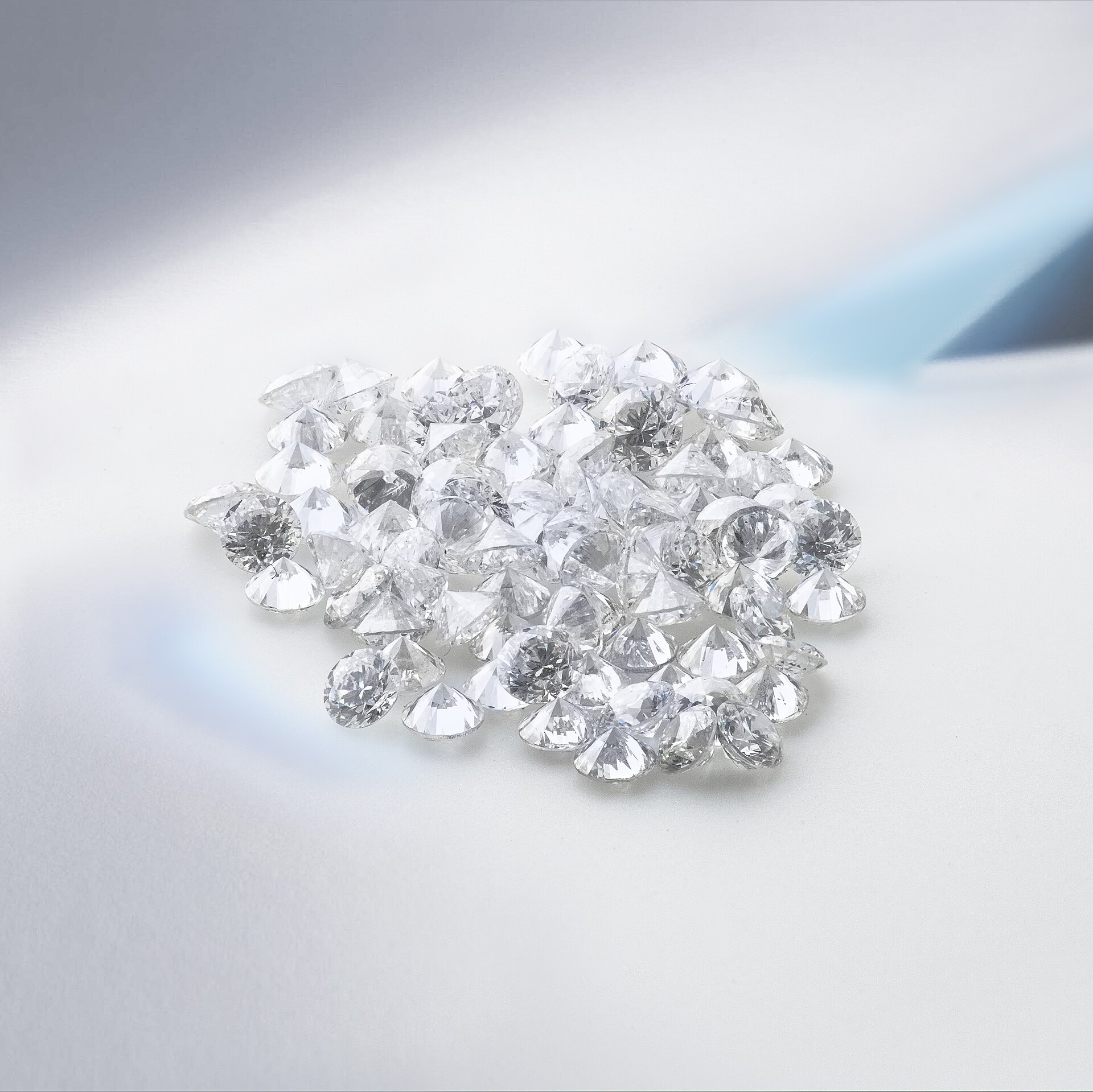
Short version: a one carat natural diamond peaked at about $10,000 in March 2022 and has fallen roughly 60 per cent in five years. The trade ran for a century on one idea, that you control the price by controlling the supply, and in 2026 that stopped working. De Beers cut output and prices still fell, because the supply that sets the price is now grown in a reactor. It even closed its own lab grown brand after wholesale prices there dropped 90 per cent. Once a stone cannot be scarce, the value has to move somewhere it can still be proven.
The numbers, before the argument
It is worth seeing how far this has gone, because the headlines have been saying "diamond prices fall" for three years and the shape of it has changed.
| What | Where it is now |
|---|---|
| De Beers average realised rough price, full year 2025 | $142 a carat, down 7% |
| De Beers rough price index, 2025 | Down 12%, or 25% once stock rebalancing is counted |
| Consolidated realised price, first half of 2026 | $105 a carat, down 32% |
| Antwerp rough, first quarter 2026 | $99 to $72 a carat, down 27% year on year |
| One carat natural, retail | About $4,200 to $6,000, against roughly $6,000 in 2021 |
| One carat lab grown, retail | About $750 to $1,500, down roughly 74% since 2020 |
| One carat natural at the peak, March 2022 | About $10,000, roughly 60% higher than today |
| Lab grown share of US engagement ring sales, 2026 | 61%, reported by CNBC, up 239% since 2020 |
| Anglo American writedowns on De Beers, three years | $6.8 billion |
Anglo American is selling De Beers. It has been trying for two years, and the valuation has kept falling while the sale process runs.
One honest caveat. Sources disagree about natural stones. Some trade analysts describe natural prices as broadly stable and only lab grown as collapsing, others put natural down 30 to 40 per cent from the peak. Both are looking at real data. The difference is which end of the market they measure, and the top end is not behaving like the middle.
The lever that stopped working
Here is the part that should worry anyone who sells stones for a living.
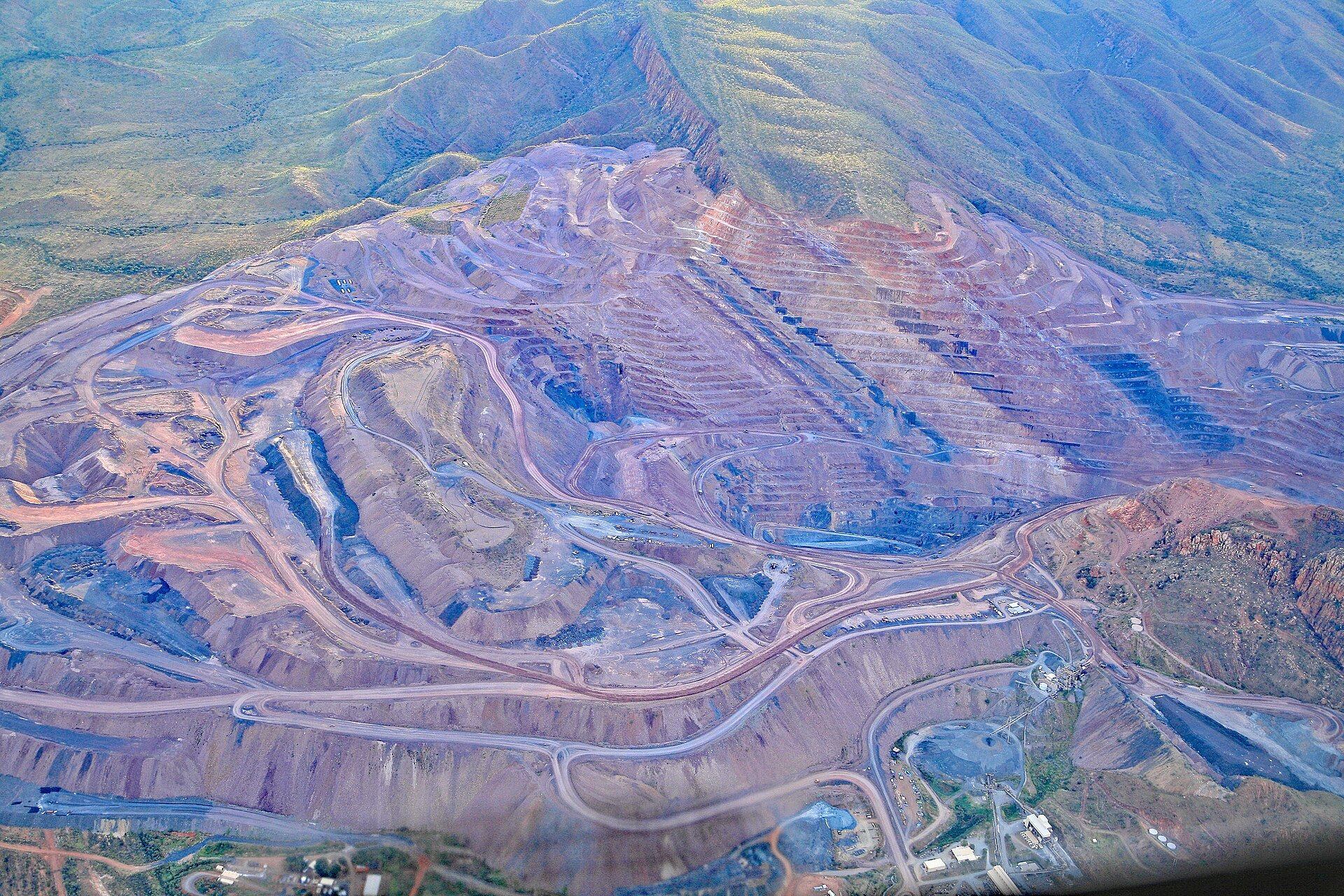
De Beers did everything the old playbook says. It suspended Venetia, its flagship South African mine, for more than two years. It cut 2026 production guidance from 26 to 29 million carats down to 21 to 26 million. It scheduled maintenance at Orapa and Jwaneng. For a while it kept official prices around 25 per cent above the market and sold discounted stones quietly on the side.
None of it held. The price kept going down, and the quiet discounting eventually became impossible to maintain.
That is what makes this different from every previous diamond slump. Restricting supply used to work. It cannot work now, because the marginal supply is no longer geological. A CVD reactor answers a price rise by running another cycle. The GIA now receives more CVD submissions in a day than it once received in a year.
Then there is the part that reads like a parable.
In 2018 De Beers launched Lightbox, its own lab grown brand, priced at a flat $800 a carat. The point was to prove that grown stones were a cheap fashion product and nothing like the real thing. It worked, in the way a controlled demolition works. Lightbox cut its price to $500 a carat, and in 2025 De Beers closed the brand, saying lab grown prices in jewellery had fallen 90 per cent at wholesale and were now tracking a cost-plus model.
Read that sentence again. The company that built the modern diamond market launched a product to prove grown stones were worthless, and had to shut it down because grown stones became too cheap to sell profitably. Its CEO called it a success.
The concentration makes it worse. More than 85 per cent of global diamond mining sits in five countries, Russia, Botswana, Angola, Canada and the Democratic Republic of Congo, and Alrosa, Russia's state producer, accounts for about 30 per cent of world output on its own and has been cutting production too. When that few producers all restrict supply and the price still falls, the problem is not the supply.
So where does the value go?
This is the question the whole trade is circling, and most of the answers being offered are nostalgia.
The stone can no longer carry the price on rarity, because the thing in the ring is chemically the same whether it took a billion years or three weeks. What is left is everything that can still be checked: who made it, out of what, powered by what, and whether the claims on the tag survive being asked about.
That is a real shift. Diamonds used to be sold on a story nobody could verify. They are moving toward being sold on evidence anybody can.
Green diamonds, and the part the marketing leaves out
Here is where it gets uncomfortable, and where the opportunity actually sits.
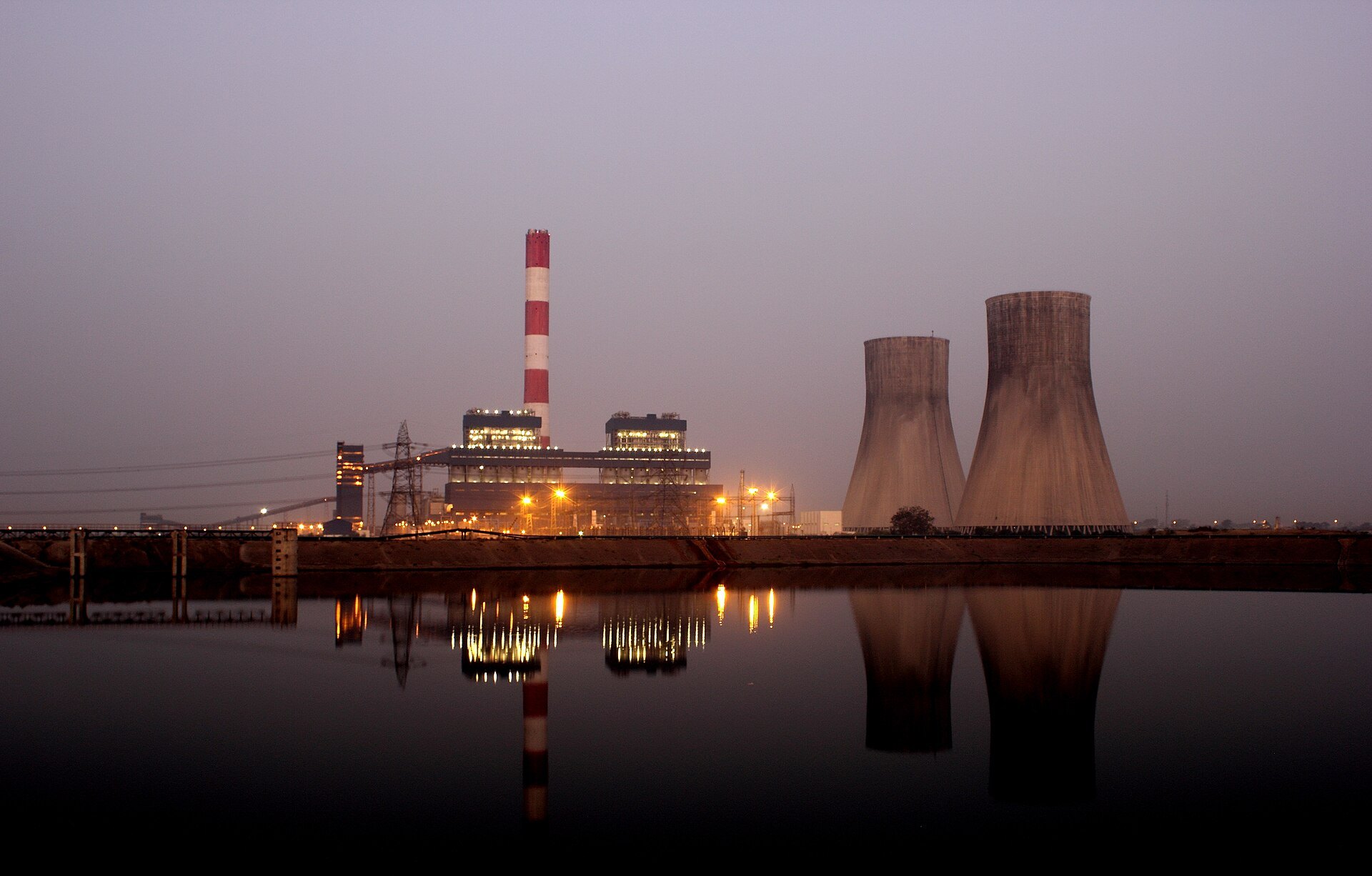
Growing a diamond takes roughly 250 to 700 kilowatt hours per carat. More than 60 per cent of the world's lab grown output comes from India and China, where coal supplies around three quarters of grid electricity. In those regions the footprint has been estimated at 260 to 612 kg of CO2 per polished carat.
Now the other number. Pandora, growing with renewable power, reports 12.58 kg CO2e per carat, verified by EY, which is roughly 90 per cent below a mined stone. That 90 per cent figure is the one you see quoted everywhere, including in CNBC's coverage of the price collapse. It is real, and it describes a stone grown on renewable electricity. It does not describe the majority of what is actually being sold.
Same stone. Same grading report. A fiftyfold difference in carbon footprint, depending entirely on what was plugged into the wall.
So "lab grown" says nothing about sustainability on its own. A stone grown on a coal grid can carry a heavier footprint than a mined diamond from a well run operation. The word that matters is not grown, it is powered.
There is a second ethical dimension that gets less airtime now. Conflict diamonds made up about 4 per cent of global production before the Kimberley Process was set up in 2003, and avoiding mining altogether removes that question along with the land and water impact. That part holds whatever powers the reactor. The carbon part does not.
Regulators have noticed. The US Federal Trade Commission warned eight jewellery marketers about unqualified environmental claims, and its Green Guides require claims to be specific and qualified. In May 2026 the UK's Advertising Standards Authority ruled against retailers using the word diamond without clearly disclosing laboratory origin. The EU is phasing in a digital product passport regime from 2026.
Which is why the future is not "green diamonds" as a slogan. It is green diamonds that can produce a facility name and an energy source, and the small number of producers who can do that are about to be worth a great deal more than the ones who cannot.
Why India is where this lands
On 13 September 2026, at the 52nd India Gem and Jewellery Awards at the Bharat Diamond Bourse in Mumbai, the Union Home Minister Amit Shah told the industry that the lab grown market could expand to nearly 50 times the size of the current diamond market in volume, and that the sector should be judged on future scale rather than on today's prices.
His actual point was sharper than the headline number. He asked Indian firms not to stay in cutting and polishing, but to take the whole chain: the machinery, the growing, the jewellery, the brands, the showrooms abroad.
| What is behind it | Detail |
|---|---|
| Where the world's diamonds are already cut | About nine in ten are processed in Surat |
| Tax | 15 year income tax exemption for rough trading in special notified zones, under the Taxation and Other Laws (Amendment) Act, 2026 |
| Bharat Ratnam common facility centre | 1.25 lakh square feet, with 3D printing, casting and refining |
| India Jewellery Park | Expected to draw about ₹50,000 crore of investment and roughly one lakh jobs |
| Money already moving | Titan launched a lab grown brand; one dedicated retailer raised ₹275 crore targeting 200 stores by 2027 |
Read that against the price data and the strategy is obvious. Falling prices are a problem if you own a mine and an opportunity if you own a factory. Volume replaces margin per stone, and India already has the volume infrastructure.
The risk in it is equally obvious. If the whole Indian pitch is cheap stones at scale on a coal grid, India wins the volume and loses the margin all over again, this time to whoever can prove their energy. That is the gap worth standing in.
Is it nearly over?
Maybe, for natural. Rapaport's market research suggests prices may be reaching a floor, and the miners have now taken enough supply out that a stabilisation is plausible. Nobody serious is forecasting a return to 2022.
For lab grown there is no floor of that kind. The price tracks the cost of production, and the cost of production keeps falling as reactors improve. That is not a slump, it is what a manufactured product does.
What it looks like in each market
The fall is global but it is not landing evenly, because duty, tax and local demand sit on top of it.
| Market | What is driving the local picture |
|---|---|
| United States | The biggest lab grown market by retail share. Imported jewellery pays about 15% in total charges from India since July 2026, against 17.5% from China, Thailand and Vietnam. See the landed cost guide |
| United Kingdom and EU | Origin disclosure is being enforced. The UK's Advertising Standards Authority ruled against undisclosed lab grown in May 2026, and the EU is phasing in digital product passports from 2026 |
| China | The demand weakness that De Beers keeps naming. Luxury consumption has not returned to the level the trade expected after reopening |
| India | Where the stones are made. Roughly nine in ten of the world's diamonds are cut in Surat, and government policy is now openly behind lab grown |
| Australia | 0% duty on Indian made jewellery under the trade agreement, so landed cost is lower than most buyers assume. See the Australia guide |
What this means if you sell jewellery
- Stop pricing off the stone. If the centre stone halves in price every few years, a business built on marking it up has no floor. Price the piece.
- Ask about energy, not origin. "Lab grown" is now table stakes. A facility name and a power source is a differentiator, and it is one very few suppliers can give you.
- Watch the metal. When the stone stops carrying the value, the metal around it gets looked at properly for the first time in years. Plated sterling does not survive that inspection.
- Be careful what you print. Regulators on both sides of the Atlantic are now treating origin disclosure as required information rather than marketing.
- Do not sell any of it as an investment. Natural resale is weak, lab grown resale is weaker, and a customer who finds that out later tells everyone.
The quiet winner
There is a second order effect that nobody planned.
Retailers moved before the miners did. Pandora, which sells in more than 100 countries, stopped using mined diamonds entirely in 2021 and went to lab grown only. Lab grown now accounts for the majority of engagement ring choices in the US, and buyers are spending the difference on the wedding or the house rather than on the stone.
Cheap, real, certified stones need something to be set in. For thirty years that was gold, and gold went up about 60 per cent in the year to late 2025 and past $5,100 an ounce in January 2026, which pushed the middle of the market out. Silver is what is left, and it works, provided it is silver that holds its colour.
This is what we do. Argentia is an Argentium Silver Trademark Registered User, licence AS2475. We work in Argentium 960, which is 96 per cent fine silver, needs no plating, resists tarnish because germanium forms a protective layer instead of copper sulphide, and heat hardens so the prongs hold a stone. We set certified moissanite, lab grown diamonds and natural diamonds in the same workshop in Jaipur. More on that in lab grown diamonds in Argentium silver.
The claims we make about the metal are the kind that can be checked, which is the only kind worth making in a market that has just learned what an unverifiable story is worth.
Frequently asked questions
Why are diamond prices falling in 2026?
Two different things are happening at once. Lab grown prices are falling because supply is effectively unlimited and production keeps getting cheaper, so wholesale is down roughly 75 per cent from 2022 levels and a one carat lab grown stone now retails around $750 to $1,500. Natural prices are falling because demand softened, particularly in China, while the industry carried too much stock. De Beers reported a 7 per cent fall in average realised rough price to $142 a carat for 2025, and a 32 per cent fall in consolidated realised price to $105 a carat in the first half of 2026.
Did De Beers cutting production stop the price fall?
No, and that is the important part. De Beers cut 2026 production guidance to 21 to 26 million carats from 26 to 29 million, suspended its flagship Venetia mine in South Africa for more than two years, and scheduled maintenance at Orapa and Jwaneng. Prices kept falling anyway. For a century the diamond business worked by controlling supply. That lever no longer moves the price, because the supply that matters is now grown rather than mined.
Are natural diamonds losing their value?
In the broad middle of the market, yes. Wholesale is down roughly 25 to 40 per cent from the 2021 and 2022 peak depending on which index you read, and a one carat natural stone that fetched about $6,000 in 2021 sits nearer $4,200 to $6,000 now. Sources disagree on the size of the fall, partly because the top of the market behaves differently: exceptional stones at D colour, internally flawless and five carats or more have not tracked the decline.
Are lab grown diamonds actually eco friendly?
It depends entirely on what powered the reactor, and most sellers cannot tell you. Growing a diamond takes roughly 250 to 700 kilowatt hours per carat. More than 60 per cent of lab grown output comes from India and China, where coal supplies around three quarters of grid electricity, and in coal heavy regions the footprint has been estimated at 260 to 612 kg of CO2 per polished carat. With renewable power the picture inverts: Pandora reports 12.58 kg CO2e per carat, verified by EY, which is roughly 90 per cent below a mined stone. Same product, a fiftyfold difference in footprint.
What did Amit Shah say about lab grown diamonds?
Speaking at the 52nd India Gem and Jewellery Awards at the Bharat Diamond Bourse in Mumbai on 13 September 2026, the Union Home Minister said the lab grown diamond market is poised to expand to nearly 50 times the size of the current diamond market in volume terms, and urged Indian firms to control the whole ecosystem from machinery to global brands. He also pointed to a 15 year income tax exemption for rough diamond trading in special notified zones under the Taxation and Other Laws (Amendment) Act, 2026.
Why did De Beers close Lightbox?
De Beers launched Lightbox in 2018 as its own lab grown brand, priced at a flat $800 a carat, to demonstrate that grown stones were a cheap fashion product rather than an engagement stone. It later cut the price to $500 a carat, and in 2025 announced the closure, stating that lab grown prices in jewellery had fallen 90 per cent at wholesale and were tracking a cost-plus model. Its industrial synthetics arm, Element Six, continues.
Is it a bad time to buy a diamond?
It is the best time in decades to buy one to wear and a poor time to buy one as a store of value. Falling prices mean a bigger or better stone for the same money. They also mean resale is weak, and weakest of all for lab grown. Buy the stone you want to look at, not the stone you expect to sell.
If the stone gets cheaper, where does the value go?
Into everything that cannot be mass produced: the design, the metal, the setting, the finish, and proof of where it all came from. When the centre stone stops carrying the price, the piece around it has to. That is why the trade is paying attention to metal quality and documentation in a way it did not five years ago.
Does the diamond price fall change what jewellery costs to import?
Not directly, but it changes the mix. Duty is charged on the value of the goods, so cheaper stones mean a smaller duty bill on the same piece. What changes more is which country you buy from. Imported jewellery into the US pays about 15 per cent in total charges from India since July 2026, against about 17.5 per cent from China, Thailand and Vietnam, and 0 per cent duty into Australia from India under the trade agreement.
What should a retailer ask a supplier now?
Four questions. What is the stone, stated on a report from a recognised laboratory. What powered the facility that grew it, at facility level rather than as a slogan. What exactly is the metal, and is it plated. And who else will be sold this design. Vague answers to any of those are the answer.
Building a range around cheaper stones?
We manufacture to your designs in Argentium 960, with certified moissanite, lab grown diamonds and natural diamonds set under the same roof in Jaipur. Winged Unicorn stamped, no plating, wholesale and private label. Send a photo of what you want made and you get a weight, a price and a lead time.
Sources
- CNBC video: Why Diamond Prices Are Falling So Fast, source of the $10,000 peak, the 61 per cent engagement ring share and the 90 per cent carbon figure
- CNBC: what is behind the fall of diamond prices to record lows
- TheStreet: diamond prices at the lowest level this century, with De Beers figures
- De Beers 2025 realised price and index, and GIA on CVD submissions
- Amit Shah at the 52nd India Gem and Jewellery Awards, 13 September 2026
- De Beers Group on closing Lightbox, and the 90% wholesale fall
- Forbes India: the carbon footprint of lab grown diamonds on coal grids
- ABC News: are lab grown diamonds as sustainable as advertised, and the FTC warnings
- Business Standard: investment and store expansion in India's lab grown market
Market and price figures come from company reporting and trade press and move quickly. Carbon figures are producer reported or estimated and vary by facility. Nothing here is investment advice.