
The short answer.
- 925 sterling is 92.5 per cent silver and 7.5 per cent copper. The copper is what makes it tarnish.
- The world's silver jewellery is made mainly in Thailand, India, Italy, China, Turkey and Mexico, and each is good at different things.
- Wholesale price is always metal + making + stones + finishing. If a supplier will not itemise it, that is information.
- Minimum orders come in units, currency, or grams. Grams is usually the buyer-friendly one.
- The cost nobody quotes for is tarnish: replating, re-polishing and returns, all absorbed by you, not the factory.
Sourcing silver is not difficult. Sourcing it well, from a supplier who will still be consistent on your fourth order, is a different exercise, and most brands learn it by getting it wrong once.
This guide covers what the terms actually mean, where the work is genuinely done, how the money is calculated, and the questions that separate a supplier who will grow with you from one who will not. It is written from the manufacturing side, which means it includes the things suppliers would rather you did not ask.
In this guide
- What 925 actually means
- Where the world's silver jewellery is made
- The four ways to buy wholesale
- How wholesale silver is priced
- Minimum order quantity, decoded
- Twelve questions to ask before a first order
- Red flags
- Hallmarking, market by market
- Shipping, Incoterms and duty
- Margin, and the cost nobody quotes
What 925 actually means
Pure silver is 99.9 per cent fine and far too soft for jewellery. It bends, it will not hold a stone securely, and a ring made from it deforms on the hand. So silver is alloyed, and the sterling standard settled at 92.5 per cent silver to 7.5 per cent other metal. That is what the 925 stamp records.
That remaining 7.5 per cent is almost always copper. Copper does the job it was chosen for, adding hardness and workability. It also does something nobody chose: it reacts with oxygen and with sulphur compounds in air, sweat, cosmetics and rubber, and the product of that reaction is the dark film we call tarnish.
Everything the trade has built since is a way of managing that consequence. Rhodium plating is the most common, and it is worth understanding what it actually is: a microns-thin layer of a platinum-group metal deposited over the silver to keep air off it. It works, for a while. When it wears through, the silver underneath tarnishes in a patch, and the customer brings it back.
Higher-purity standards exist. Britannia silver is 95.8 per cent. Argentium replaces the copper with germanium and comes in grades at 93.5, 94 and 96 per cent. More on that further down, because it changes the arithmetic in the last section of this guide.
Where the world's silver jewellery is made
Manufacturing clusters exist for real reasons, and knowing which cluster does what saves you a season of wrong conversations.
| Centre | Known for | Suits you if |
|---|---|---|
| Thailand | High-volume machine-made silver, chain, marcasite, consistent finishing | You want scale on simple shapes at tight prices |
| India | Hand-set gemstone work, low minimums, strong CAD and casting, high design flexibility | You want design-led work, small runs, or exclusivity |
| Italy | Chain, findings, machine-made precision, Arezzo and Vicenza | You need chain quality above all else |
| China | Scale and speed, mixed metal ranges, plated and stainless alongside silver | You are buying very large volumes of a fixed design |
| Turkey | Filigree, traditional silversmithing, heavier decorative work | Your aesthetic is ornamental rather than minimal |
| Mexico | Taxco silversmithing traditions, heavier hand-worked pieces | You want a visible handmade character |
None of these is a ranking. A brand doing minimal machine-made hoops and a brand doing hand-set stone pendants should not be sourcing from the same place, and the failure mode is usually a buyer taking a design-led brief to a volume factory and being quietly disappointed by the sample.
The four ways to buy wholesale
The word wholesale covers four quite different arrangements, and the difference decides who owns the shape you sell.
| Route | What it is | Design ownership |
|---|---|---|
| Stock catalogue | Buy finished pieces already made, ship immediately | Supplier's. Anyone can buy the same piece |
| White label | Supplier's design, your brand on it | Supplier's, licensed to you for resale |
| Private label | Designed to your brief, made only for you | Yours |
| Full custom | Your CAD or sketch, reproduced | Yours |
Stock catalogue is fastest and least defensible. Full custom is slowest and most defensible. Most brands that end up with a recognisable line moved through these in order, starting with white label to find out what sells and only then paying for exclusivity on the shape that repeated. We wrote that sequence out in detail in private label vs white label.
How wholesale silver is priced
Ask any supplier to break a quote into four numbers. The good ones do it before you ask.
Every silver quote, decomposed.
- Metal. Finished weight of the piece, multiplied by the silver rate on the day.
- Making. The labour in casting, filing, setting and polishing that specific design. Complexity moves this, not size.
- Stones. Where the design carries them, priced by size, cut and type.
- Finishing. Hallmark, packaging, tags, certificate insert.
Two consequences follow, and both catch new buyers out.
Silver moves daily. It is a traded commodity. A supplier who quotes you a fixed price with no validity window is either carrying that risk themselves, which they will price in somewhere, or they will come back to you later and reopen the number. A quote with an honest validity period on it is a better quote than one without.
Weight is a design decision. Two pendants of the same visual size can differ by 40 per cent in weight depending on whether they are hollow or solid, and that difference lands entirely in the metal line. If a price comes back higher than you expected, ask what the piece weighs before you ask for a discount. Very often the answer is to redraw it, not to negotiate.
Minimum order quantity, decoded
Minimum orders come in three forms and they are not equivalent.
| Form | Typical of | What it means for you |
|---|---|---|
| Currency value | Stock catalogue wholesalers | Easy to plan, but you are buying their range |
| Units per design | Volume factories | All your risk sits on one shape |
| Metal weight | Made-to-order manufacturers | Spread across as many designs as you like |
A weight-based minimum is usually the friendliest of the three, and the reason is worth stating plainly. If a factory asks for 200 pieces, that is 200 pieces of one design and you find out whether you were right only after they are made. If they ask for 300 grams, you can put eight shapes in front of your audience for the same commitment.
Converting grams to pieces.
- A daily-wear pendant: roughly 3 to 6 grams.
- A ring: roughly 3 to 5 grams.
- A pair of earrings: roughly 4 to 8 grams.
- So 300 grams is roughly 50 to 90 pieces in a mixed range, and more if the pieces are fine.
Chain work, heavy signets and stone-set designs shift those numbers considerably. Any manufacturer worth ordering from will give you an exact count against your actual designs rather than a rule of thumb.
Twelve questions to ask before a first order
Send these before you send a design. The answers tell you more than a catalogue does.
- Are you the factory, or are you a trading intermediary? Both can be fine. Not knowing which is not.
- Who owns a design I commission? It should be you, from CAD approval.
- Will you sell my private label design to anyone else? Get the answer in writing.
- Is your minimum in units, currency or grams? And can it spread across designs?
- Will you itemise metal, making, stones and finishing? A lump sum hides where the money goes.
- How long does a quote stay valid? Silver moves daily; a real answer exists.
- What does the sample cost, and is it credited against bulk?
- What is the lead time from sample approval, and when is it fixed in writing?
- What happens if a batch comes back defective? Ask before you need to know.
- What do you stamp, and what hallmarking applies in my market?
- What are the Incoterms, and who clears customs?
- Do repeat orders run on the same approved CAD and sample? This is how batch two matches batch one.
Red flags
Walk away, or at least slow down, if you see these.
- A lump-sum price with no itemisation. The opacity is rarely accidental.
- A fixed forever price on a traded metal. Someone is absorbing a risk, and it is priced in somewhere you cannot see.
- Reluctance to put design ownership in writing before CAD work begins. This tells you exactly how they intend to behave later.
- No physical sample offered on a first order. Renders flatter. Metal does not.
- The words tarnish proof or non-tarnish. No silver alloy is. A supplier who overclaims to you will let you overclaim to your customer, and the complaint lands at your counter.
- Vagueness about defects. Every factory produces a bad batch eventually. What matters is what was agreed beforehand.
Hallmarking, market by market
Hallmarking rules are national, and they are the buyer's responsibility in the destination market, not the factory's. Confirm the specifics with your own authority, because they change and they differ.
- United Kingdom. Silver articles above a low weight threshold must be hallmarked by an Assay Office. Your supplier's stamp is not a substitute for it.
- European Union. Requirements vary by member state, and separately the nickel directive limits nickel release from items in prolonged skin contact.
- United States. There is no compulsory assay office, but marking must be truthful and the FTC jewellery guides govern how precious metal content is described.
- India. BIS hallmarking applies to the domestic market.
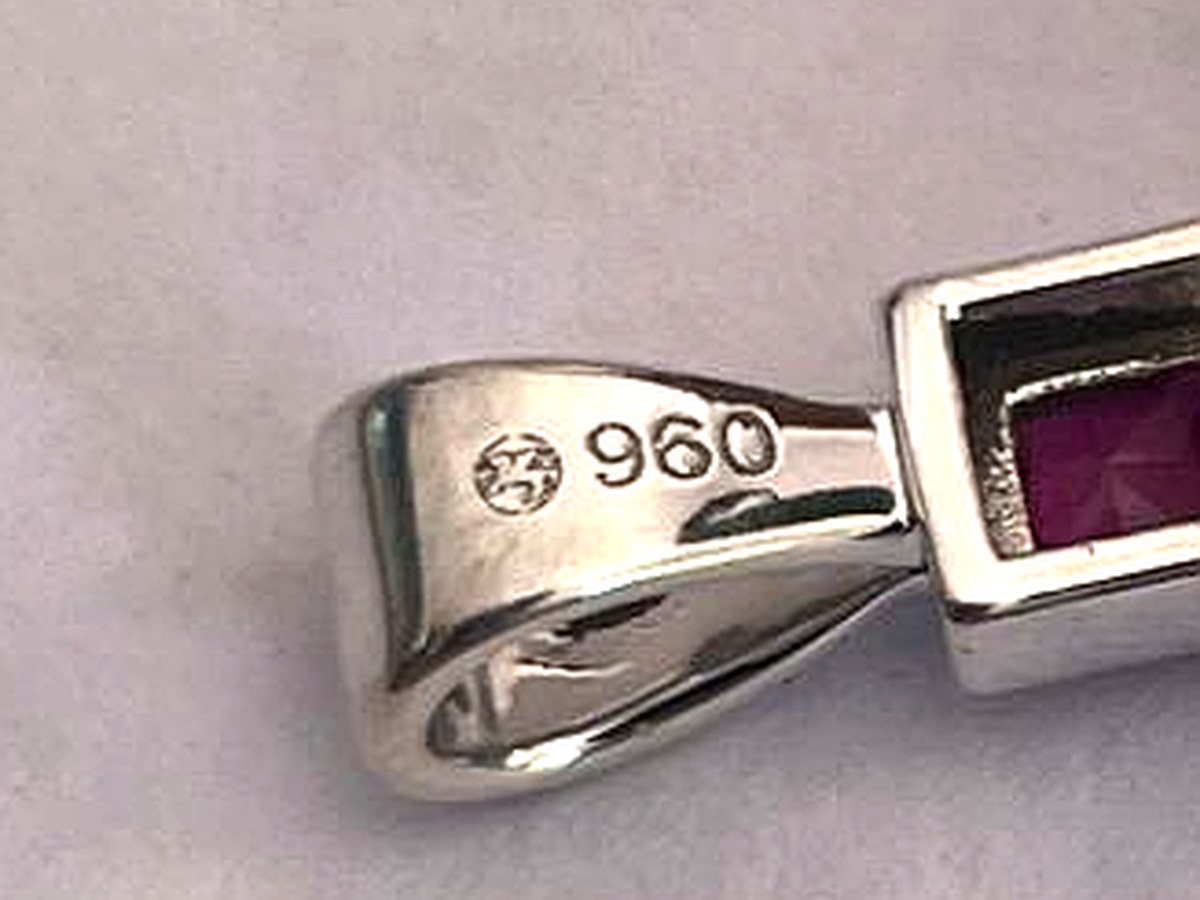
Separately from any national hallmark, alloys can carry their own certification mark. Argentium pieces, for example, carry the Winged Unicorn of the Argentium Guild alongside the grade number, which certifies the silver content independently of any assay office.
Shipping, Incoterms and duty
Precious metal shipments are small, light and valuable, which makes courier the normal route and insurance non-negotiable. Two things to settle in writing before the first order.
Incoterms. These define exactly where the supplier's responsibility ends and yours begins. Under FOB-style terms you take on the goods early and control the freight. Under DDP-style terms the supplier delivers duty paid and the landed cost is known up front. Neither is better in the abstract. What matters is that both sides wrote down which one applies.
Duty and import tax. These are almost always the buyer's, and they are almost always underestimated in first-order margin calculations. Get your commodity code and your rate before you place the order, not after the invoice arrives.
Margin, and the cost nobody quotes
Silver jewellery is commonly retailed at somewhere between two and three times wholesale cost, with keystone at two times as a traditional floor and higher multiples normal for branded or design-led pieces.
That is the margin on the spreadsheet. The margin in the business is different, because of a line item that appears in no quotation:
What sterling costs you after the sale.
- Replating. Rhodium wears through. Replating is a service cost, and the customer expects you to absorb it.
- Re-polishing. Over the counter, on pieces that came back grey.
- Returns and refunds from customers who believe they were sold a fake because a real silver piece went dark in four months.
- Photography that stops matching the product. Your listing shows day one. The customer received month eight.
None of these are factory costs. They are all retailer costs, they recur, and they are the reason a cheaper wholesale price is sometimes the more expensive decision.
The alternative worth pricing against
Argentium is a modern alloy that replaces the copper in sterling with germanium. Germanium hardens the metal in the same way copper does, but instead of forming a tarnish film it migrates to the surface and forms a thin, clear, self-regenerating protective layer.
The practical consequences for a wholesale buyer are short. It is up to seven times more tarnish resistant than sterling. It needs no rhodium plating, so there is no coating to wear through. It is nickel free. It is whiter, because there is no copper warming the colour. And Argentium 960 is 96 per cent fine silver, above the Britannia standard.
It costs more per gram. The silver content is higher and the alloy is licensed. Whether it costs more per year depends entirely on how many of the four line items above you are currently absorbing, which is an arithmetic problem specific to your business rather than an argument.
Run the numbers with your own return rate. That is the only honest way to answer it. And if you would like a comparison against a specific design and quantity, send it over and we will price both.