
The short answer.
- India is the largest supplier of gem and jewellery to the United States, and has been for years.
- Since 24 July 2026, India sits in the lower US tariff band. Total import duty runs about 15.5 to 16 per cent.
- Competing hubs including China, Thailand, the UAE, Hong Kong, Turkey, Israel and Vietnam sit 2.5 points higher.
- The real reason is not duty. It is that hand setting at volume is something India does and most places no longer can.
- What you should check before ordering is listed at the end, and it is not a short list.
If you sell jewellery in the United States and you have looked at manufacturing abroad, you have already been told India is cheap. That is the least interesting thing about it, and on its own it is not a reason to move production anywhere.
Here is the version that actually matters to a buyer, including the parts that argue against it.
In this guide
What you are actually buying
Almost every jewellery process can be automated except one. Setting stones by hand, well, at volume, remains a human skill that takes years to build and cannot be bought as a machine.
That is the thing India actually sells. Jaipur has been a stone cutting and setting centre for centuries, and the bench skill sits in families rather than in factories. A workshop that has been setting since 1984 has people who have set more stones by hand than most Western workshops will see in their lifetime.
You do not import from India because labour is cheap. You import because there are people who can pave set a hundred stones in a row and have them sit level, and there are fewer and fewer places left where that is true.
exports, Apr 25 to Jan 26
export destination
on Indian jewellery
over China and Thailand
The coloured stone and setting advantage
Two things follow from that history, and both matter if your product has stones in it.
Coloured stone sourcing. Jaipur is one of the largest coloured gemstone trading centres in the world. If your design needs eighty matched stones in a specific size, shade and cut, the chance of finding them in one place is higher there than almost anywhere else. In practice that means fewer compromises on the design and fewer delays hunting for a match.
Setting labour at volume. Hand setting is priced per stone in India, and the rate makes designs viable that would be uneconomic elsewhere. A tennis chain with ninety stones or a pave band with sixty is a routine order rather than a special project.
This is also why the comparison with a domestic US maker is not really like for like. A US workshop will often quote the same design with fewer, larger stones, because that is what the labour cost pushes you toward.
Where the tariff position stands now
This changed recently and most of what you will read online is out of date.
On 24 July 2026 the United States moved from the temporary Section 122 surcharge to a Section 301 regime. Indian gem and jewellery carries a 10 per cent additional tariff under it. Added to the existing MFN duty of roughly 5.5 to 6 per cent, the effective total lands at about 15.5 to 16 per cent.
The part worth knowing is comparative. India was placed in the lower 10 per cent band. China, Hong Kong, Thailand, Turkey, the UAE, Israel and Vietnam were placed at 12.5 per cent. According to the Gem and Jewellery Export Promotion Council, that gives Indian exporters a 2.5 percentage point advantage over every competing manufacturing hub.
| Origin | Additional tariff | Position |
|---|---|---|
| India | 10% | Lower band |
| China | 12.5% | Higher band |
| Thailand | 12.5% | Higher band |
| UAE | 12.5% | Higher band |
| Hong Kong, Turkey, Israel, Vietnam | 12.5% | Higher band |
Read this properly. Tariff rates move, and this one has moved three times in two years. Treat any duty figure, including this one, as something to verify on the day rather than a permanent condition.
What is more stable is the relative position. India currently sits below its competitors rather than above them, which is a reversal of where things stood in early 2026 when exports to the US fell by over 45 per cent.
How the cost actually breaks down
A quote from an Indian manufacturer should separate four things, and if it does not, ask.
| Line | What drives it |
|---|---|
| Metal | Finished weight multiplied by the rate on the day. Weight is a design decision, not a fixed fact |
| Labour | Charged per gram. Complexity drives this, not size |
| Stones | Per carat for the stone, per stone for the setting. Both should be itemised |
| Finishing | Stamping, packing, certificates, tags |
Then, on your side: freight, insurance, and US duty at the rate on the day of entry. A supplier who quotes you a landed price without naming the duty is guessing on your behalf.
One thing that surprises US buyers. On stone heavy pieces, the stones can be 80 to 90 per cent of the total. Where a piece is stone heavy, arguing about the metal is arguing about the small number.
How to check quality from 8,000 miles away
This is the real question, and it is answerable.
- XRF testing. Non destructive, takes seconds, and gives you the exact metal composition. Any US jeweller can run it on a piece you receive. Ask your supplier to state the alloy and grade in writing, then verify it.
- Stone certification. IGI and GIA both operate in India. Certification on lab grown diamonds and moissanite is normal and inexpensive. A supplier who resists it is telling you something.
- A paid sample first. Always. Wear it, wash it, scratch it, have it tested. Sample cost is normally credited against a bulk order, and if it is not, ask why.
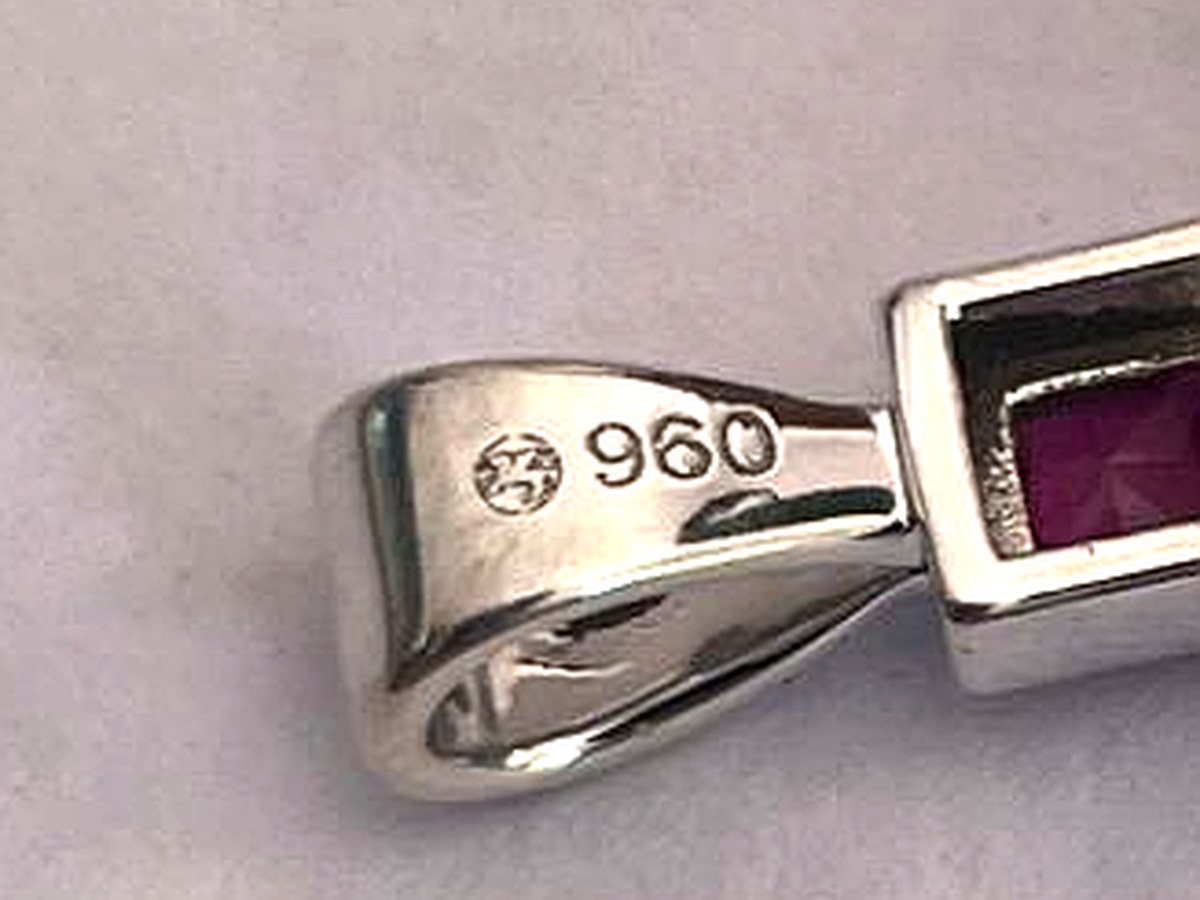
- The stamp. A hallmark or maker's mark on the piece is a claim the manufacturer has committed to physically. Argentium carries the Winged Unicorn, which certifies silver content independently of the seller.
- Photographs at the halfway point. Ask for them at the setting stage, before polishing. Problems are fixable then and expensive later.
The honest case against
Distance costs you speed. Air freight is three to five days, but a remake after a mistake costs you a full cycle. Plan lead times with slack in them.
Sampling is slower than a local maker. A US workshop can hand you a wax model this week. From India, allow two to three weeks per sample round. Budget for two rounds.
Returns are impractical on small quantities. Shipping a piece back for rework rarely makes economic sense below a certain value. Front load the quality checks instead.
Quality varies enormously. India has both the best bench work in the world and some of the worst. The country is not a quality signal. The specific workshop is.
That last point is the one that matters most. Nobody should choose a manufacturer because of where it is. The reason to look at India is that the odds of finding hand setting skill at volume are better there. The work of finding the right workshop is still yours.
What to ask a supplier
- What exactly is the alloy, with the grade, in writing?
- Is it plated? If yes, with what and how thick?
- Can you send a paid sample, and is it credited against bulk?
- What is the minimum order, and is it by weight or by piece?
- What are the payment terms, and what triggers the balance?
- Do you stamp, and with what?
- Who owns the design if I send you a drawing?
- What certification can you provide on the stones?
- What is the lead time, and what happens if you miss it?
- Will you put the duty position in writing so I am not surprised at customs?
A supplier who answers all ten in one message is worth talking to. One who answers with a price list is not.
The short version
The reason to manufacture in India is hand setting at volume and coloured stone access, both of which are genuinely hard to replace. The tariff position, currently about 15.5 to 16 per cent with India in the lower band, is a supporting fact rather than the reason.
The country is not the quality signal. The workshop is. So the useful work is not deciding whether to look at India, it is knowing what to ask once you do.
We make in Argentium 960 only, as an Argentium Silver Trademark Registered User, registration AS2475, licensed by Argentium International in London. Send us a design and a quantity and you get back a quote itemised into metal, making, stones and finishing, with the grade and the weight written down.
For brands and retailers in the United States
India’s first house of Argentium silver
Argentium 960 only, Winged Unicorn stamped, Registered User AS2475. Paid samples credited against bulk. Quotes itemised into metal, making, stones and finishing.
Ask for a sampleor email toshit@argentia.in