Short version: fine jewellery has three big impacts, and they are mining the stone, mining the metal, and plating the metal. A laboratory grown diamond set in recycled Argentium 960 removes all three at once. That is a specific claim rather than a slogan, and the third one, plating, is the one almost no brand mentions, because rhodium is among the most environmentally costly metals on earth.
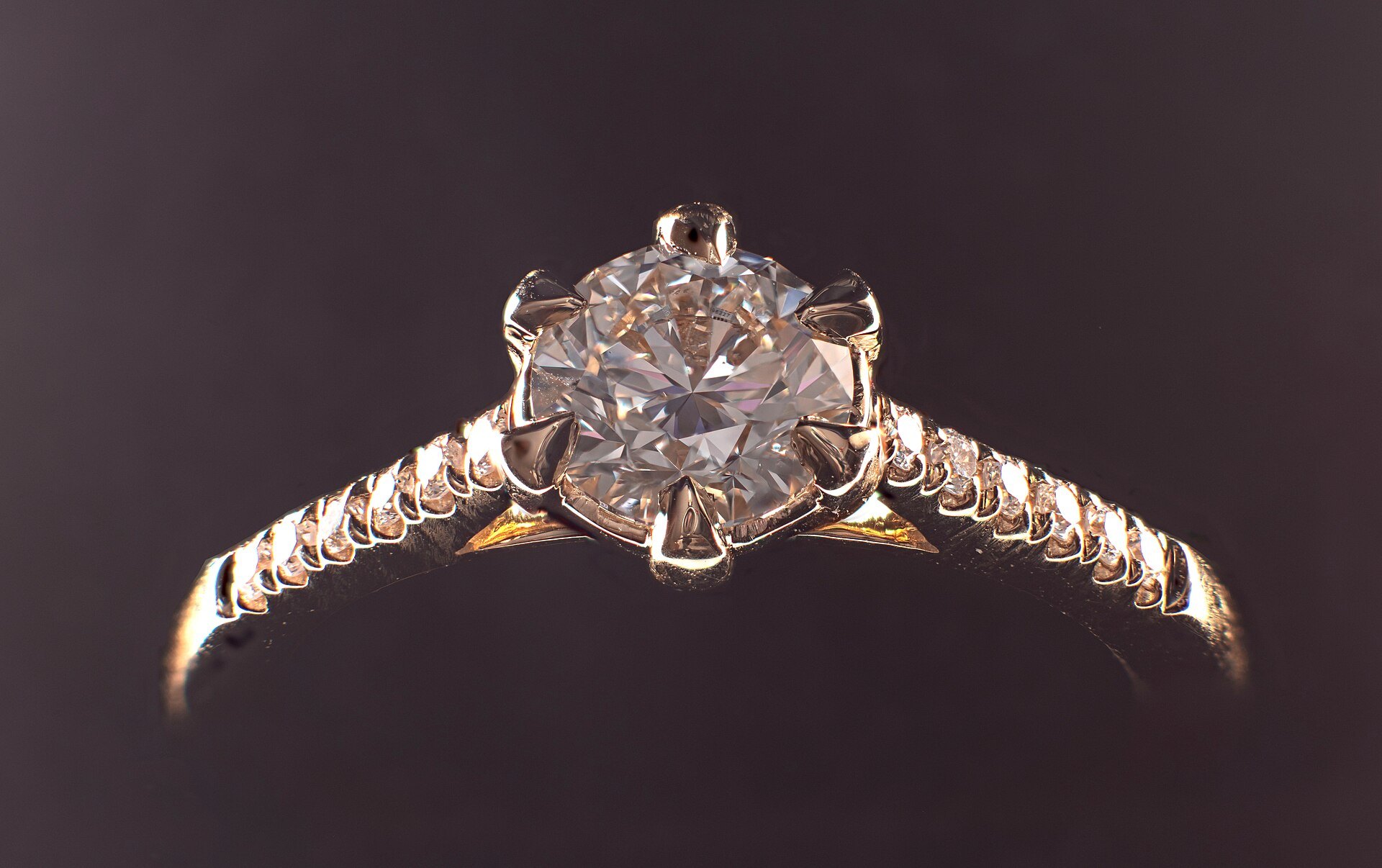
Start with what cannot be claimed
You will see jewellery sold as the most sustainable, the most ethical, the greenest. None of that can be substantiated, and regulators have stopped tolerating it. The US Federal Trade Commission's Green Guides require environmental claims to be specific and qualified, and it has warned jewellery marketers over exactly this language. In May 2026 the UK's Advertising Standards Authority ruled against retailers using the word diamond without clearly disclosing laboratory origin.
So this is not an article arguing that anything is green. It is an article about which impacts a piece can actually remove, and how you check.
The three impacts
| Impact | Where it comes from | What removes it |
|---|---|---|
| Mining the stone | Open pit and alluvial diamond mining, land, water, community displacement | A laboratory grown stone |
| Mining the metal | Silver mining, largely a byproduct of other mining, with poor traceability | Recycled silver |
| Plating the metal | Rhodium plating on sterling, repeated every few years as it wears | Argentium 960, which needs none |
Most sustainable jewellery marketing addresses the first one, occasionally the second, and essentially never the third.
The stone
A laboratory grown diamond is a diamond. Same carbon, same crystal structure, 10 on the Mohs scale, graded on the same four Cs by the same laboratories. What it does not carry is a mine.
Then comes the part the marketing leaves out. Growing takes roughly 250 to 700 kilowatt hours per carat, and more than 60 per cent of the world's output comes from India and China, where coal supplies around three quarters of grid electricity. In those conditions the footprint has been estimated at 260 to 612 kg of CO2 per polished carat. Pandora, growing on renewable power, reports 12.58 kg CO2e per carat, verified by EY.
Same stone, same grading report, an enormous difference in footprint. The question that matters is not whether it was grown. It is what powered the reactor.
There is a second dimension that survives regardless of the electricity. Growing a stone avoids the land, the water and the community impact of mining altogether, and it avoids the conflict diamond question, which covered around 4 per cent of global production before the Kimberley Process was established in 2003. That part holds on any grid. The carbon part does not.
We went through the market side of this in why diamond prices are falling so fast.
The metal
Silver mostly arrives as a byproduct of mining other metals, which means it inherits that mining's impact and is difficult to trace. The physical figures are the clearest part: mining a kilogram of silver has been estimated to displace roughly 150 tonnes of earth and produce about 12,000 litres of wastewater.
Recycled silver avoids that. On carbon the published savings vary widely, from around 87 per cent fewer emissions per gram up to an order of magnitude or more, and they disagree because different studies count different stages. Treat the direction as solid and the precise multiple as contested, which is how the honest version of this always reads.
One thing is not contested. Silver can be recycled indefinitely without losing quality. Metal refined a century ago performs identically to metal refined last week.
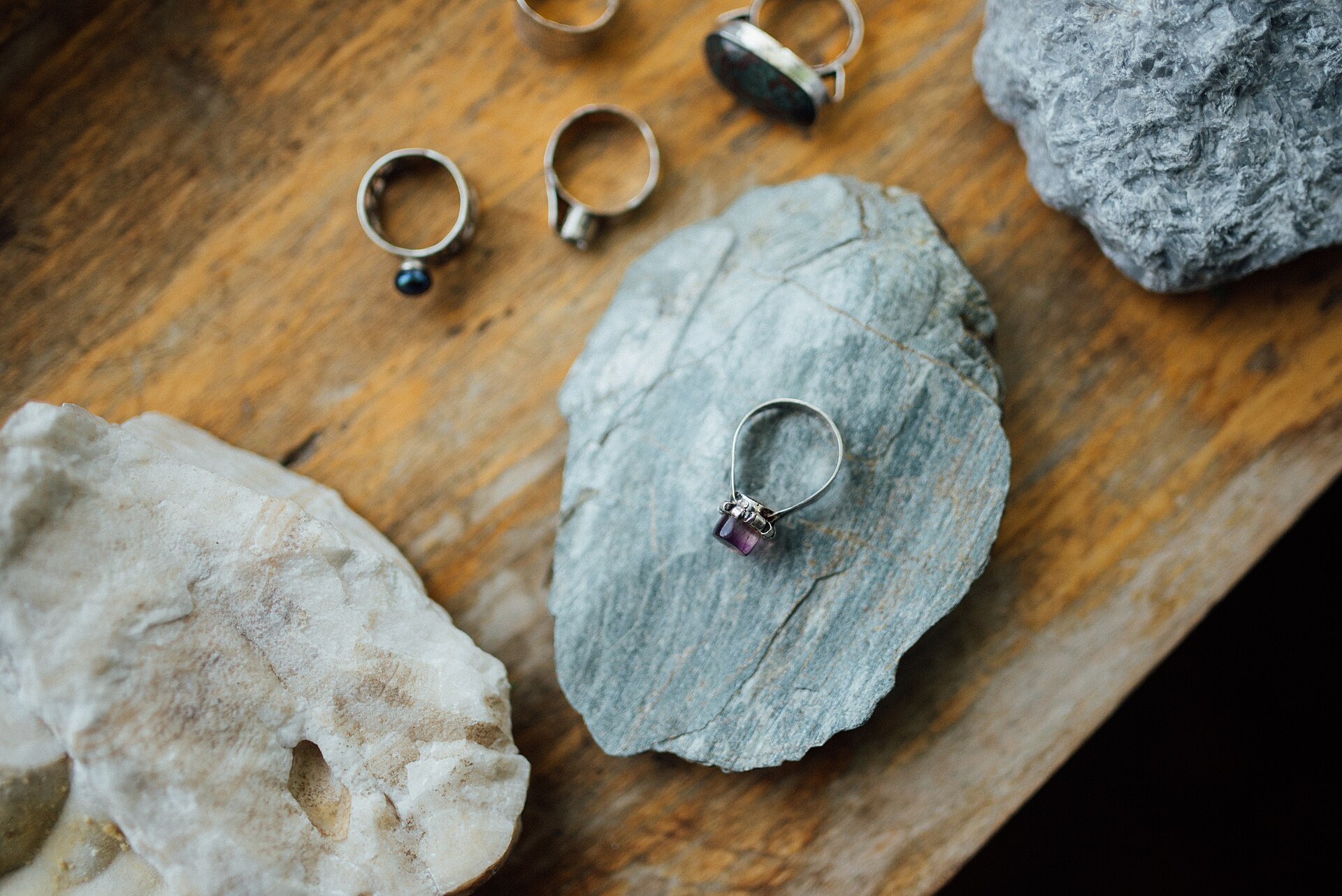
The plating, which is the part nobody mentions
Here is the one worth knowing, because it is invisible on the tag.
Most sterling silver jewellery is rhodium plated. Sterling contains copper, copper tarnishes, and plating hides that while making the metal look whiter. It is standard practice across the trade.
Rhodium is a platinum group metal and one of the most environmentally intensive metals produced anywhere. In published comparisons of environmental impact per kilogram of primary metal, rhodium ranks above gold, near the very top of the list.
And plating wears. It goes first at the shank and the prong tips, on a piece worn every day within a couple of years, which means the piece either looks tired or goes back for replating. A recycled silver ring that gets replated three times over its life has quietly spent that rhodium three times.
Argentium 960 is white without plating. It is 96 per cent fine silver, and the germanium in the alloy forms a protective layer instead of the copper sulphide that blackens sterling. No plating at the start, no replating later, no rhodium at all. It is also nickel free, and it heat hardens, which matters for holding a stone.
This is a small point that most sustainability copy misses entirely, and it is the one that compounds, because it is the only one that repeats every few years.
The impact nobody counts: the piece that gets replaced
Every footprint calculation assumes one purchase. Real life does not work that way.
A plated piece that greys at the shank after eighteen months, or a piece whose prongs ease open because the mount was too soft for the stone, gets replaced rather than repaired. The second purchase carries the full footprint of the first, and no marketing counts it.
Durability is a sustainability feature that almost nobody sells as one. A piece that still looks right in ten years has, in the only measure that matters, halved its own footprint.
Where the luxury part comes in
None of this would matter if the result looked like a compromise. It does not, for reasons that have nothing to do with ethics.
| Property | What it means on the hand |
|---|---|
| 96 per cent fine silver | Whiter than sterling, and the colour is the metal rather than a coating |
| No plating | Nothing to wear through, so no two tone patches at the shank |
| Germanium tarnish resistance | It stays bright in a drawer and in a display case |
| Heat hardenable | Prongs hold a larger stone without easing open |
| No nickel | No reaction on skin that reacts to plated findings |
| No firestain | The white goes all the way through, so polishing does not reveal a grey shadow |
Set a certified stone in that, finish it properly, and it is fine jewellery by any standard a buyer would apply. The sustainability is a property of the materials, not a story printed on the box.
How to check, on any brand, including ours
- What is the metal, exactly, and is it plated. A vague answer means plated.
- Is the silver recycled, and can they say where it came from.
- Which laboratory graded the stone, and does the report state it is laboratory grown. IGI and GIA are the usual names.
- Which facility grew the stone and what powered that facility. This is the question almost nobody can answer, and it is the one that determines the carbon.
- Does the piece carry a maker's mark. An unmarked piece has nobody standing behind it.
Any brand that answers "we are committed to sustainability" to four of those five has answered none of them.
The honest conclusion
The most sustainable piece of jewellery is one that already exists. Vintage, inherited, or an old piece remade is genuinely lower impact than anything new, and anyone who tells you otherwise is selling.
Of the things made new, a laboratory grown stone in recycled, unplated Argentium 960 removes more of the identified impacts than any other combination we are aware of, and it does it in a piece that will still look right in a decade. That is the claim, stated in a way that can be checked. We will not call it eco friendly, because that word means nothing and regulators have said so.
Frequently asked questions
What is the most sustainable fine jewellery you can buy?
Nothing you buy new is zero impact, so the honest answer is the piece that removes the most and lasts the longest. Fine jewellery has three main impacts: mining the stone, mining the metal, and plating the metal. A lab grown diamond set in recycled Argentium 960 removes all three, because the stone is grown rather than dug, the silver is recycled rather than mined, and Argentium needs no rhodium plating at all. The most sustainable piece of all is still one that already exists, which is why vintage and remodelling are legitimate answers too.
Is recycled silver actually better than mined silver?
Substantially, though published figures vary a great deal. Estimates of the saving run from roughly 87 per cent fewer emissions per gram up to an order of magnitude or more, and the reason for the spread is that different studies count different stages. What is not in dispute is the physical side: mining a kilogram of silver has been estimated to displace around 150 tonnes of earth and generate roughly 12,000 litres of wastewater, and recycling avoids that entirely. Silver can also be recycled indefinitely without losing quality.
Why does rhodium plating matter for sustainability?
Because rhodium is one of the most environmentally intensive metals on earth per kilogram produced, ranked above gold on impact per kilogram in published comparisons. Most sterling silver jewellery is rhodium plated to look white and to slow tarnish, and the plating wears off, so a piece that is worn regularly needs replating every few years. Argentium 960 is white without plating and resists tarnish through germanium, so that cost never happens, not once and not every three years.
Are lab grown diamonds eco friendly?
Only if the facility that grew them ran on clean electricity, and most sellers cannot tell you either way. Growing a diamond takes roughly 250 to 700 kilowatt hours per carat. On coal heavy grids the footprint has been estimated at 260 to 612 kg of CO2 per polished carat. With renewable power Pandora reports 12.58 kg CO2e per carat, verified by EY. Same stone, same report, a vastly different footprint. Ask which facility grew it and what powered that facility.
Does Argentium silver count as sustainable?
On three specific grounds, which is how a claim should be made. It is made from recycled silver rather than newly mined. It needs no plating, so it avoids rhodium entirely and avoids the replating cycle. And it lasts, because there is no plated layer to wear through and expose a different colour underneath. It is not a magic material and nobody should call it eco friendly without saying which of those three they mean.
Is silver a downgrade from gold for fine jewellery?
It was treated that way when gold was affordable. Gold rose about 60 per cent over the year to late 2025 and passed $5,100 an ounce in January 2026, which moved the whole middle of the market. Argentium 960 is 96 per cent fine silver, whiter than sterling, nickel free and heat hardenable so prongs hold a stone properly. Set with a certified stone and finished properly it reads as fine jewellery, not as a substitute.
Can I claim my jewellery is eco friendly when I sell it?
Not in those words. The US Federal Trade Commission's Green Guides require environmental claims to be specific and qualified, and it has already warned jewellery marketers over unqualified eco friendly and sustainable claims. In May 2026 the UK's Advertising Standards Authority ruled against retailers who used the word diamond without clearly disclosing laboratory origin. Name the material and the fact: recycled silver, no plating, laboratory grown stone with a report. Those are checkable. Eco friendly is not.
How do I check any of this rather than take a brand's word for it?
Four questions, and the answers should be specific. What is the metal, exactly, and is it plated. Where did the silver come from, recycled or newly mined. Which laboratory graded the stone and does the report state it is laboratory grown. Which facility grew it and what powered that facility. A supplier who can answer all four is rare. One who answers none of them is telling you something.
Making a range that has to survive the questions
Argentia is an Argentium Silver Trademark Registered User, licence AS2475. We manufacture to your designs in Argentium 960, with certified moissanite, lab grown diamonds and natural diamonds set in the same workshop in Jaipur. Winged Unicorn stamped, no plating, wholesale and private label. Send a photo of what you want made and you get a weight, a price and a lead time.
Sources
- Forbes India on the carbon footprint of lab grown diamonds on coal grids
- ABC News on lab grown sustainability claims and the FTC warnings
- A jeweller's account of recycled versus mined silver emissions
- Land and water figures for silver mining, and recycled silver quality
- Environmental impact ranking of primary metals per kilogram, showing rhodium near the top
- Energy per carat, and the UK ASA ruling on origin disclosure
Environmental figures here come from producer reports, trade sources and published comparisons, and they vary by study and by facility. They are given as ranges for that reason. Nothing here is a certification.